The Communication Layer Behind Connected Manufacturing
How do machines actually communicate with modern manufacturing platforms?
In a connected manufacturing environment, machines and industrial equipment continuously generate data. Temperature, pressure, speed, machine status, alarms, production values, and other operational parameters can provide valuable insights into what is happening on the factory floor.
But collecting this data is only the first step. The data needs a reliable and efficient way to move from machines and industrial devices to the software platforms that can monitor, analyze, and act on it.
This is where MQTT (Message Queuing Telemetry Transport) plays an important role.
What Is MQTT?
MQTT is a lightweight messaging protocol designed for efficient communication between devices and applications. It uses a publish/subscribe communication model, making it well suited for connected manufacturing environments.
Instead of machines communicating directly with every application that needs their data, MQTT uses a central MQTT broker to manage the communication.
A simplified flow looks like this:
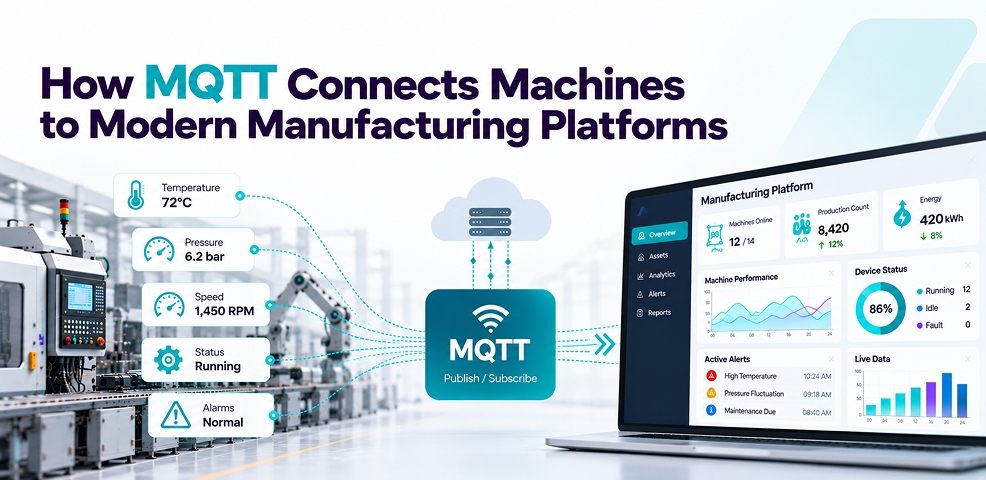
Machine / Sensor → MQTT Publisher → MQTT Broker → MQTT Subscriber → Manufacturing Platform
For example, a machine may publish its current temperature to a specific MQTT topic. A manufacturing platform subscribed to that topic can receive the data in real time and use it for monitoring, analytics, alerts, or other operational processes.
How MQTT Works in Manufacturing
However, connecting machines is not the final objective. The real value comes from what organizations can do with the data.
The machine or an edge device can publish information such as:
- Machine running or stopped status
- Temperature
- Pressure
- Speed
- Production count
- Energy consumption
- Faults and alarms
This information is published to specific MQTT topics.
The MQTT broker receives these messages and distributes them to the applications or systems that have subscribed to the relevant topics.
For example:
Machine → factory/line1/press01/temperature → MQTT Broker → Monitoring Platform
The manufacturing platform can then process this information and present it to operators, maintenance teams, production managers, or other users.
Why MQTT Is Useful for Connected Factories
Manufacturing environments often contain different types of machines, controllers, sensors, and industrial systems. These devices may generate data continuously and at different frequencies.
MQTT provides a lightweight communication layer that can help connect these data sources to modern applications.
Some of its key characteristics include:
Lightweight Communication
MQTT has low communication overhead, making it suitable for environments where devices have limited network resources or where large volumes of machine data need to be transmitted efficiently.
Publish/Subscribe Architecture
The publish/subscribe model separates data producers from data consumers.
A machine does not need to know which application will use its data. It simply publishes the data, while authorized applications subscribe to the topics they need.
Real-Time Data Flow
Manufacturing platforms can receive machine information as it is published, enabling near real-time visibility into production and equipment conditions.
Scalable Connectivity
As factories add more machines, sensors, and connected devices, MQTT can provide a structured communication layer for handling data from multiple sources.
From Machine Data to Manufacturing Intelligence
Connecting machines is not the final objective.
The real value comes from what organizations can do with the data after it has been collected.
Once machine data reaches a manufacturing platform, it can support applications such as:
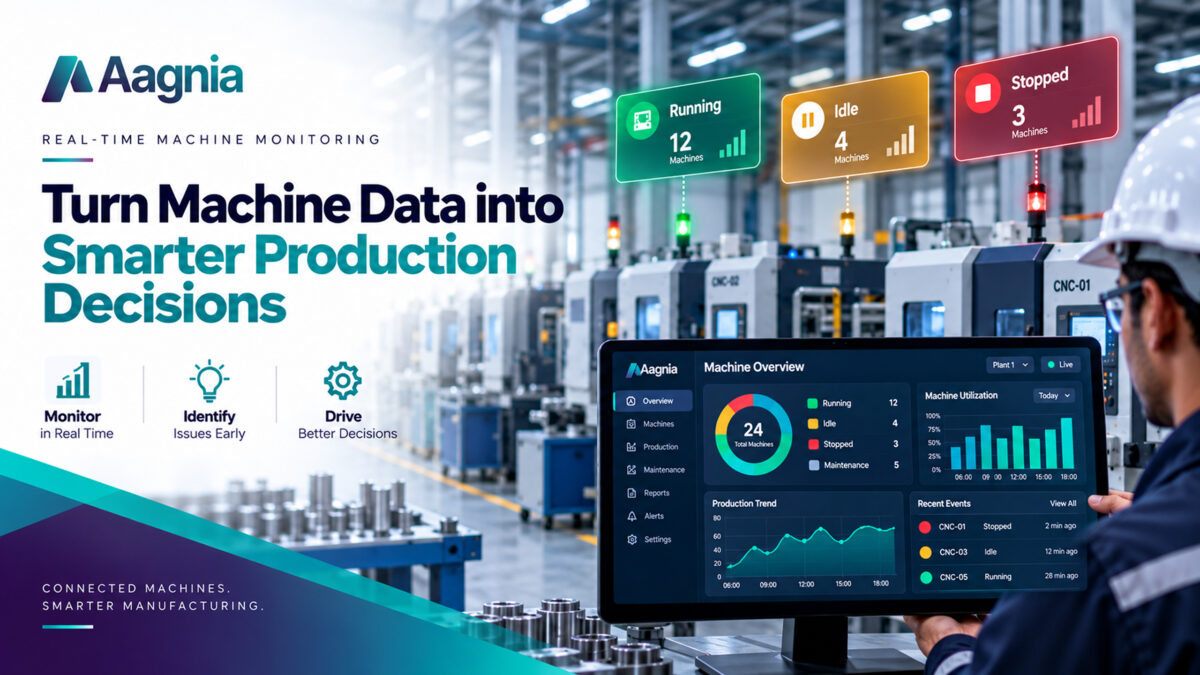
- Real-time machine monitoring
- Production visibility
- Equipment status tracking
- Alarm and event monitoring
- Performance analysis
- Predictive maintenance
- OEE monitoring
- Production analytics
- Operational decision-making
For example, a machine’s temperature data by itself may not provide much value. But when that data is continuously collected, visualized, analyzed against historical trends, and combined with machine status or production information, it can help teams identify abnormal conditions and respond earlier.
MQTT and Modern Manufacturing Platforms
Modern manufacturing platforms act as a bridge between industrial equipment and the people responsible for production and operations.
Platforms such as IOT3Sixty from Aagnia Technologies can use industrial data to provide greater visibility into connected assets and operations.
The communication layer helps bring machine data into the platform, while the platform turns that data into meaningful information that teams can monitor and use.
This creates a connected flow:
Machines → Data → Communication → Platform → Insights → Action
The goal is not simply to connect more machines. The goal is to make the information generated by those machines useful for the people managing manufacturing operations.
The Bigger Picture
MQTT is one piece of the larger industrial connectivity ecosystem. Depending on the machine, controller, application, and architecture, manufacturing environments may also use technologies such as OPC UA, Modbus, REST APIs, or other industrial communication methods.
The right approach depends on the existing equipment, connectivity requirements, system architecture, and business objectives.
What matters is creating a reliable path from the factory floor to the systems that can turn operational data into actionable insights.
Conclusion:
MQTT provides a lightweight and flexible communication layer for connecting machines, sensors, and industrial devices with modern manufacturing platforms.
By enabling machine data to move efficiently from the factory floor to connected applications, MQTT can support real-time monitoring, analytics, alerts, and better operational visibility.
But the real value isn’t simply connecting machines.
It is turning machine data into information that teams can actually use to understand operations, identify problems, and make better decisions.
What communication protocol is your manufacturing setup using today — MQTT, OPC UA, Modbus, or something else?