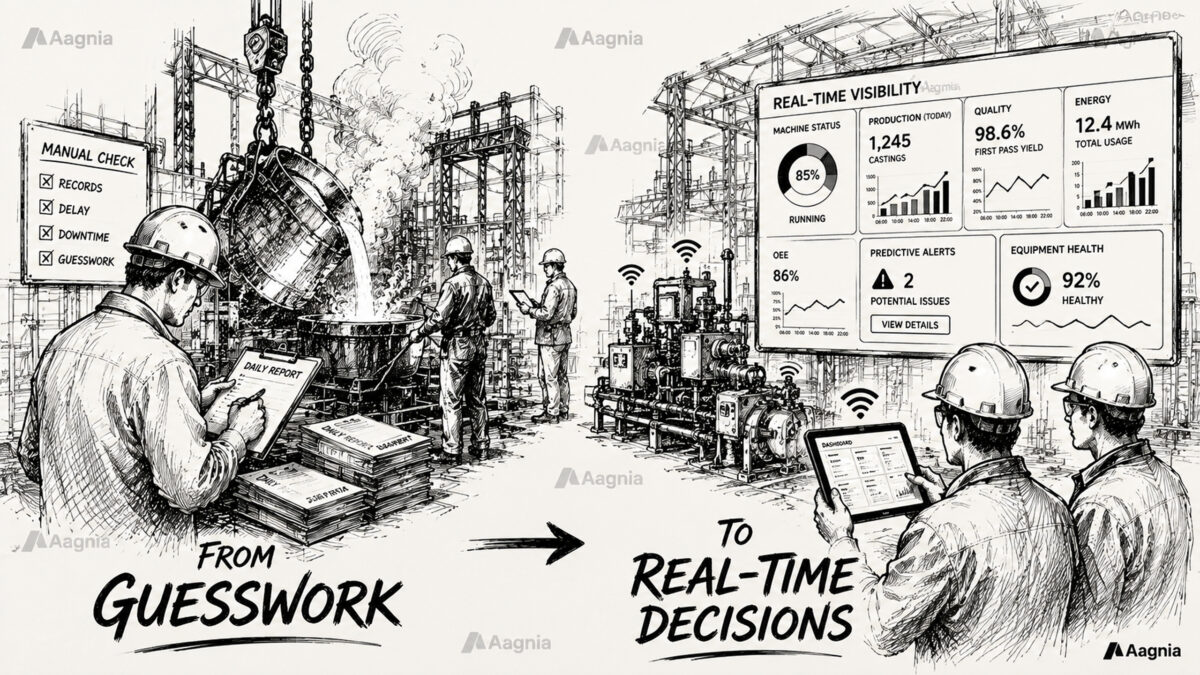
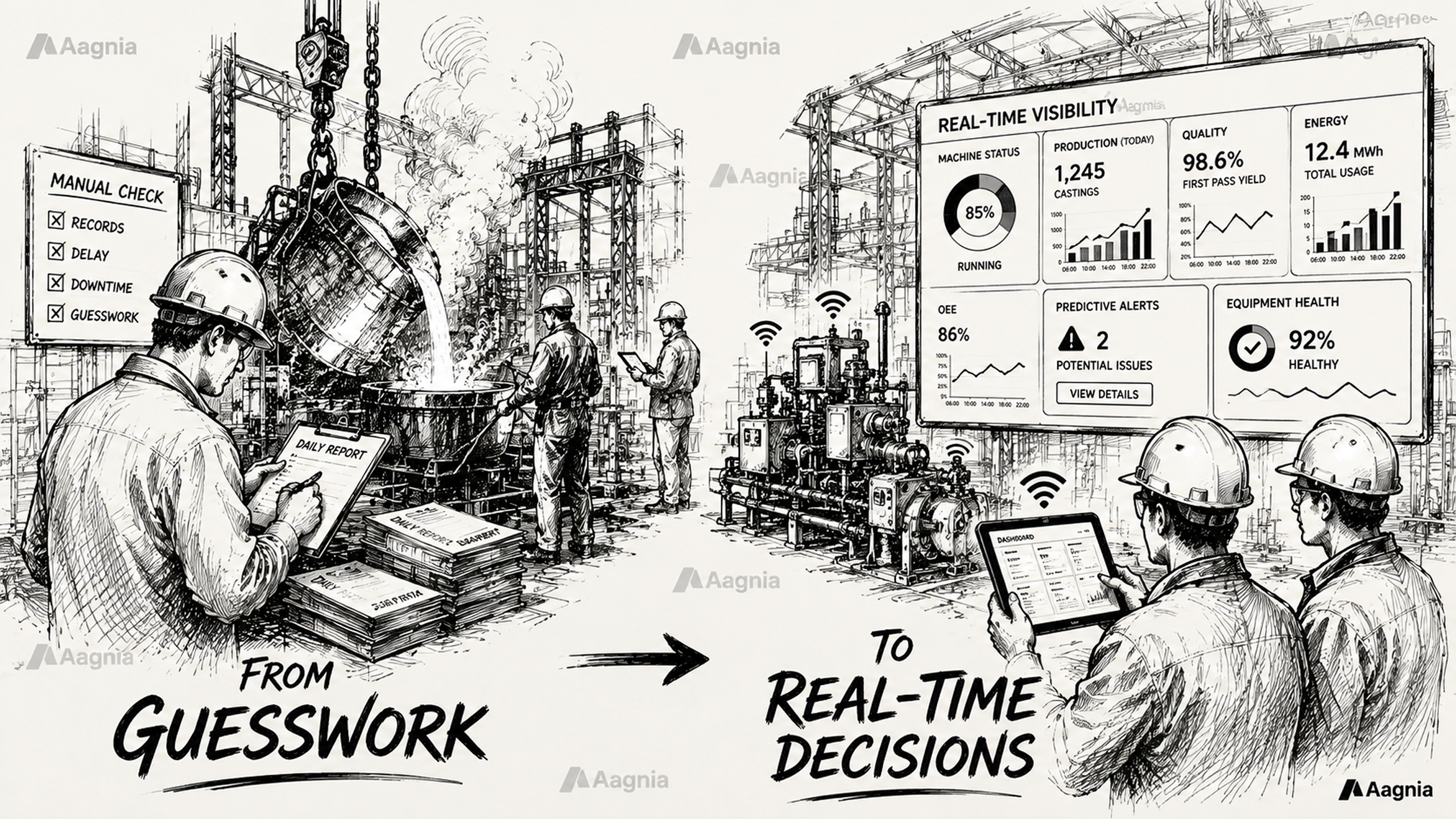
How Industrial IoT Is Helping Modern Foundries Work Smarter, Not Harder
Have you ever walked through a foundry and thought, “What if every machine could tell us exactly what’s happening right now?”
That is the reality many modern foundries are working toward.
Despite having skilled teams and years of industry experience, many foundry operations still depend on manual updates, paper records, spreadsheets, and disconnected machines. When something goes wrong, teams often discover the problem only after production has already been affected.
When Production Data Isn't Available in Real Time
Does any of this sound familiar?
- A machine stops unexpectedly, and no one knows why until it is inspected.
- Production data is spread across multiple systems and spreadsheets.
- Quality issues are discovered only after an entire batch is completed.
- Maintenance happens only after equipment breaks down.
- Managers spend more time collecting reports than making decisions.
These challenges aren’t caused by a lack of experience. They are often the result of systems that were never designed to work together.
When machine data, production information, quality records, and maintenance activities remain disconnected, it becomes difficult to understand what is actually happening on the shop floor.
This Is Where Industrial IoT Makes a Difference
Industrial IoT connects machines, systems, and operational data to create a more connected and visible production environment.
Instead of treating every machine as a separate unit, Industrial IoT can connect the entire foundry into one intelligent ecosystem.
With the right Industrial IoT setup, foundries can:
- Monitor critical machines in real time
- Receive instant alerts when abnormal conditions occur
- Track production, quality, and energy consumption from a single dashboard
- Use AI-powered insights to identify patterns and trends
- Move from reactive maintenance toward predictive maintenance
- Give decision-makers access to live operational data
The goal isn’t simply to collect more data.
The goal is to turn machine and production data into information that teams can actually use to make faster decisions.
What Can a Connected Foundry Achieve?
Imagine having better visibility into what’s happening across the shop floor instead of waiting for end-of-shift reports.
A connected Industrial IoT environment can help support:
- Less unexpected downtime
- Better casting quality and consistency
- Faster production decisions backed by live data
- Lower maintenance and operating costs
- Greater visibility across the shop floor
- More time focused on improvement instead of firefighting
The value comes from connecting these capabilities together rather than relying on isolated systems.
From Reactive Operations to Proactive Decisions
The biggest shift Industrial IoT brings is not simply automation.
It is the ability to move from reacting to problems after they occur toward identifying potential issues earlier and making decisions using real-time information.
A machine’s condition, production performance, quality information, and maintenance data can provide a much clearer picture of what is happening across the operation.
Instead of asking:
“What happened?”
teams can start asking:
“What is happening now, and what should we do next?”
The Future of Foundry Operations
The future of foundries isn’t about replacing people.
It is about giving skilled teams the information they need, exactly when they need it.
Foundry operators and engineers already bring years of practical knowledge to the production floor. Industrial IoT can complement that expertise by providing real-time visibility into machines, production, quality, and maintenance.
When experience and real-time operational data work together, decisions can become faster, more informed, and more proactive.
Conclusion:
Industrial IoT is helping foundries move beyond disconnected machines, manual reporting, and reactive problem-solving toward more connected and data-driven operations.
The transformation doesn’t need to start with the entire factory. It can begin with one machine, one process, or one operational challenge and gradually expand as the benefits become clear.
The question is no longer whether your foundry can collect data. It’s how effectively you can use that data to make better decisions.
- MQTT in Modern Manufacturing
- How Smart Batch Operations Improve Production Traceability
- Predictive Maintenance: How IoT and AI Work Together
- IOT3Sixty MES for Downtime Tracking and Analysis
- Production Planning and Shop Floor Execution
- Manufacturing Execution System (MES): Smart Factory Solution
- Warehouse Management System (WMS) for Smarter Warehouses
- Smart Factories: WMS, MES, AI & Real-Time Data
- Industrial IoT for Foundries: Smarter, Connected Manufacturing
- RFID Asset Tracking for Manufacturing: Reduce Audit Time