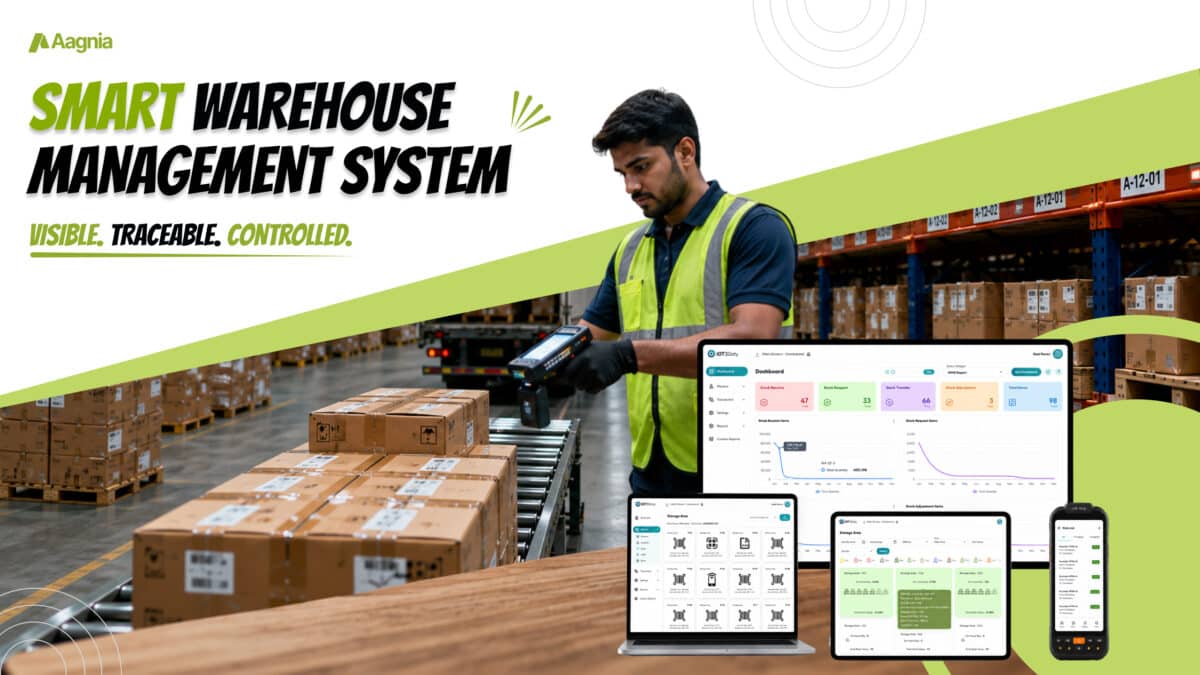
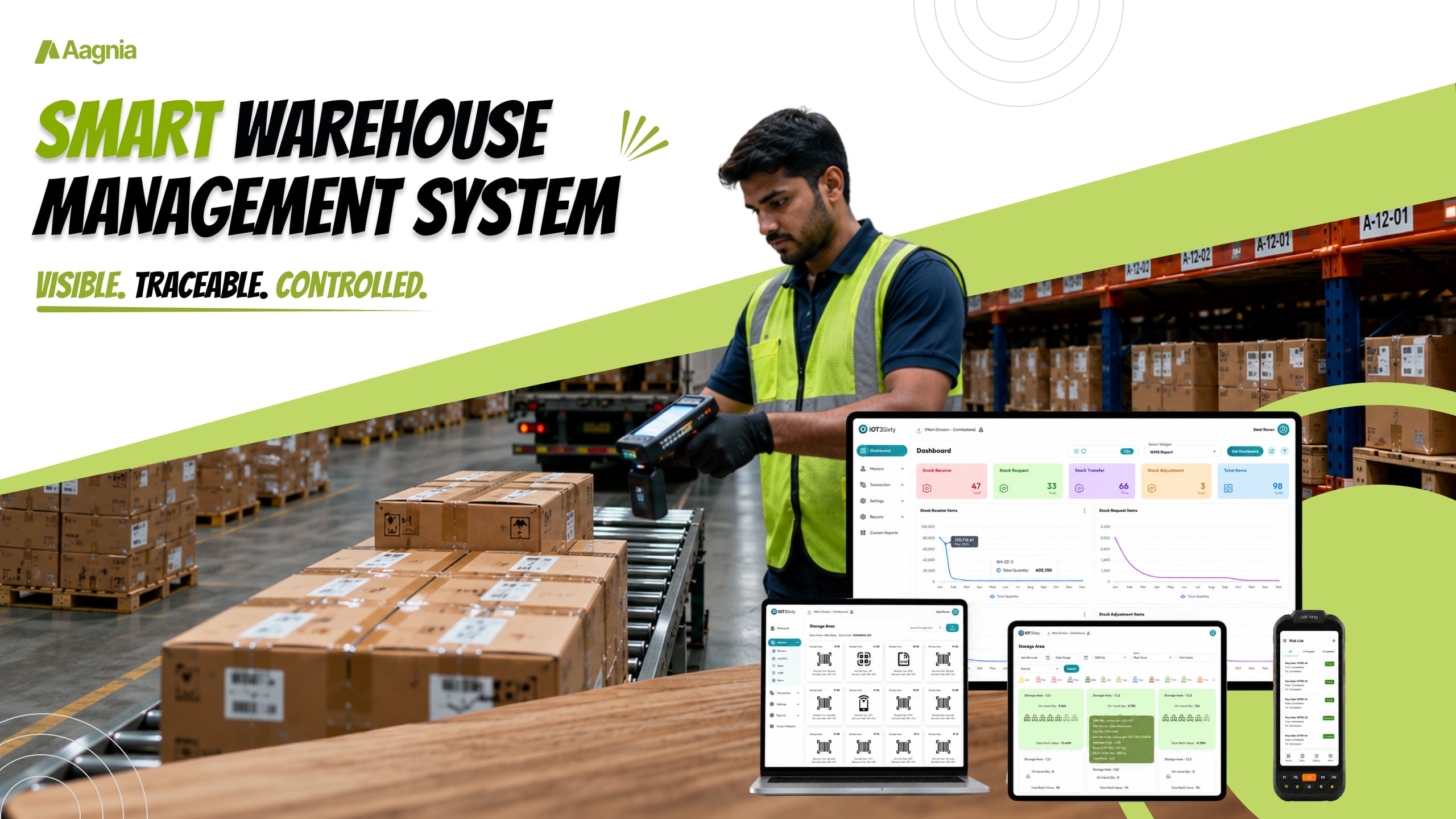
Empowering Businesses with Smarter Warehouse Operations
A warehouse doesn’t become efficient simply by storing inventory — it becomes efficient when every movement is visible, traceable, and controlled.
Many businesses still struggle with inventory inaccuracies, manual tracking, and limited visibility across warehouse operations. The solution isn’t adding more spreadsheets — it’s building a connected warehouse with a robust Warehouse Management System (WMS).
At IoT3Sixty, a product from Aagnia Technologies, we’ve developed a Warehouse Management System (WMS) that helps organizations simplify warehouse operations through structured workflows, centralized data, and real-time visibility.
Building a Connected Warehouse with WMS
A modern warehouse needs more than basic inventory tracking. It needs a system that connects inventory, locations, transactions, users, and reports into a structured operational workflow.
IoT3Sixty WMS provides the tools businesses need to manage warehouse operations more efficiently and maintain better visibility across their inventory.
What Does Our WMS Enable?
Real-Time Dashboard
A real-time dashboard provides a centralized visual interface for monitoring stock levels, warehouse activities, and operational metrics.
With live data updates, teams can monitor inventory, track warehouse activities, and analyze operational performance more efficiently.
Master Data Management
A strong warehouse operation starts with well-structured master data.
The WMS provides master data management for:
- Divisions
- Locations
- Zones
- Units of Measure (UOM)
- Items
This establishes a structured operational foundation and helps maintain consistency across warehouse processes.
Seamless Inventory Transactions
Warehouse inventory moves through multiple stages every day. Managing these movements manually can create discrepancies and make traceability difficult.
The WMS supports seamless inventory transactions, including:
- Stock Receive
- Stock Transfer
- Stock Request
- Location Receive
- Stock Adjustment
By managing these activities through structured workflows, businesses can maintain better control over inventory movements.
Configurable System Settings
Every business has different warehouse requirements.
IoT3Sixty WMS provides configurable system settings that allow businesses to adapt the system to their operational needs.
These include:
- General Configuration
- Sequence Configuration
- Color Code Customization
This flexibility helps organizations configure warehouse workflows according to their specific requirements.
Comprehensive Warehouse Reports
Visibility doesn’t stop with inventory transactions.
The WMS provides comprehensive reports covering key warehouse activities, including:
- Storage Area
- Stock Receive
- Stock Transfer
- Stock Request
- Location Performance
- Inventory Insights
These reports help teams understand warehouse activity and make decisions using structured operational information.
Custom Reporting Engine
Different businesses require different types of reports.
The custom reporting engine allows businesses to generate tailored reports using:
- Filters
- Grouping
- Export capabilities
This provides greater flexibility when analyzing warehouse data and creating reports based on specific operational requirements.
Why a Warehouse Management System Matters
A well-designed Warehouse Management System is more than a tool for inventory tracking.
It helps create standardized processes, improve stock accuracy, enhance traceability, and provide the visibility needed for faster, data-driven decisions.
When warehouse activities are managed through connected workflows, teams can spend less time searching for information and more time managing operations effectively.
Creating a Strong Foundation for Warehouse Modernization
As warehouses continue evolving, digital transformation starts with building a strong operational foundation.
When inventory, locations, transactions, and reporting work together seamlessly, businesses gain better visibility into their warehouse operations and the confidence to scale efficiently.
A connected WMS can help bring structure to everyday warehouse activities while providing the information teams need to manage inventory and make informed operational decisions.
Compliance and Regulatory Requirements:
In today’s regulatory landscape, businesses must comply with various data protection and privacy regulations. Regular application maintenance plays a critical role in meeting these compliance requirements. By conducting security audits, implementing necessary controls, and ensuring data integrity, businesses can demonstrate their commitment to protecting user information and avoid legal consequences.
Conclusion:
Warehouse efficiency depends on more than how much inventory a business can store. It depends on how effectively that inventory can be received, moved, tracked, managed, and reported.
With a connected Warehouse Management System, businesses can move away from fragmented tracking and manual processes toward a more structured and visible warehouse operation.
IoT3Sixty WMS brings together inventory management, warehouse transactions, master data, configurable settings, and reporting to help businesses build a more connected approach to warehouse management.
- MQTT in Modern Manufacturing
- How Smart Batch Operations Improve Production Traceability
- Predictive Maintenance: How IoT and AI Work Together
- IOT3Sixty MES for Downtime Tracking and Analysis
- Production Planning and Shop Floor Execution
- Manufacturing Execution System (MES): Smart Factory Solution
- Warehouse Management System (WMS) for Smarter Warehouses
- Smart Factories: WMS, MES, AI & Real-Time Data
- Industrial IoT for Foundries: Smarter, Connected Manufacturing
- RFID Asset Tracking for Manufacturing: Reduce Audit Time