Categories
insights

Smarter Working with the Cloud
Smarter Working with the Cloud

Smarter-Working-with-the-Cloud

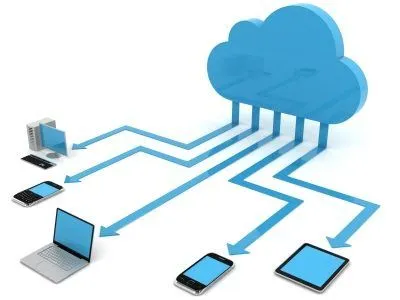
The cloud has emerged as more than a means of computing power. Cloud storage and platforms also help companies modernize their work practices by driving more efficient work practices, saving time and money, and driving innovation.

Machine learning and artificial intelligence:

Cloud-based artificial intelligence (AI) technologies, including machine learning, are helping companies add value as the amount of data they collect continues to grow. 

From logistics companies that analyze the efficiency of transportation networks to e-commerce brands that test website performance in real time, AI algorithms enable companies to gather new insights from their data and improve their way of working. 

Companies that don’t have the budget or talent to build their own AI infrastructure (many companies don’t) can take advantage of the AI infrastructure by running the cloud service provider’s system.

Automation:

Automation is an important driver of cloud adoption, especially when it comes to improving the efficiency of business operations.

 By centralizing data and systems in the cloud, enterprises can automate many of their internal processes, such as integrating data from different locations and creating business intelligence dashboards.

Today, many organizations are trying to strengthen the connectivity between different software with the goal of better managing their growing cloud footprint and ensuring that solutions from different vendors work together seamlessly.

Delegation of IT ops:

As more vendors launch solutions that can be hosted on external servers, some companies will choose to outsource some of their IT operations to third parties. 

Instead of hiring a dedicated team to build, manage, and maintain the system, companies can reduce operational costs and focus on their core products or services. 

However, sensitive data and technology must be considered when deciding which operations to outsource so as not to compromise governance or compliance practices.

Categories
insights

Cloud Delivery Models

Cloud Delivery Models

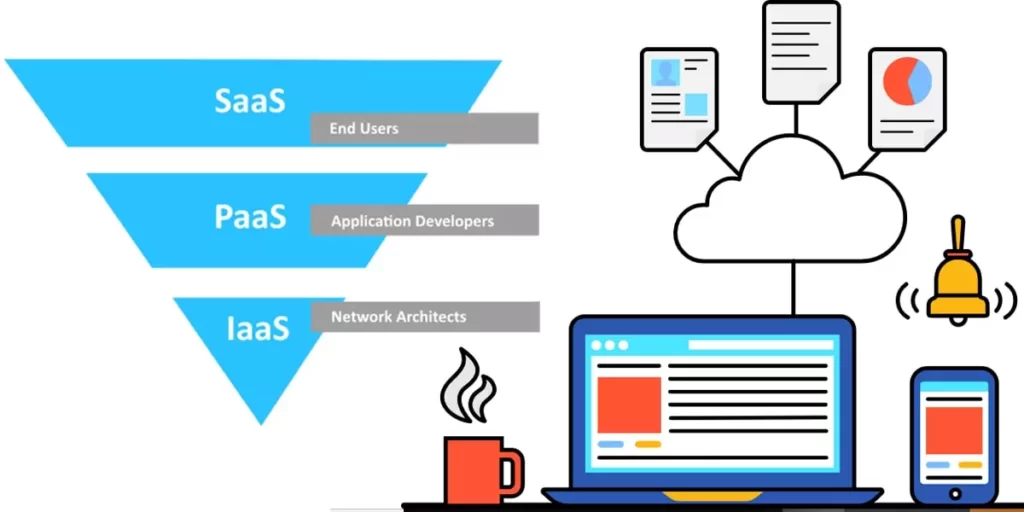
Software-as-a-Service (SaaS) applications deliver software that users access through a browser over the Internet. Vendors manage hardware, databases, security, and infrastructure, but users can usually configure software to suit their needs. For example, customer relationship management for sales, service, marketing, HR software for HR.

cloud delivery models

SaaS: Software-as-a-service (SaaS)

Software-as-a-Service (SaaS) applications deliver software that users access through a browser over the Internet. Vendors manage hardware, databases, security, and infrastructure, but users can usually configure software to suit their needs. For example, customer relationship management for sales, service, marketing, HR software for HR.

PaaS: Platform-as-a-service (PaaS) 

Platform-as-a-Service (PaaS) cloud solutions provide developers with the software and operating systems they need to build cloud-based applications. Whether it’s a mobile app for better inventory tracking or a social media platform for consumers. Enterprises are starting to use PaaS cloud systems for network security because they can easily customize them to their specific security requirements.

Multi Cloud

Certain companies want to distribute their internal computer processing and storage requirements across multiple cloud platforms and applications from different vendors, often based on their needs. 

For example, it is common to choose different cloud providers for different features such as ERP, security, and marketing technology. An all-in-one business management platform that supports a large number of features is the best option for many companies, but it may still require complementary solutions to support other areas of the business. 

Enterprises may also extend the use of public clouds to their computing resources to avoid lock-ins and leverage them in negotiations.

Private cloud

A private cloud is a cloud computing model in which services are provided through a private infrastructure to use a single business, usually managed by the same business. Businesses are choosing private cloud to enjoy the benefits of cloud services through vendors without taking the cost of building and maintaining the cloud infrastructure itself.

Hybrid cloud

Many companies are opting for a hybrid cloud model that combines public cloud services with a single business-only private cloud deployment. This is especially true for organizations that collect sensitive data or do business in highly regulated industries such as insurance where data privacy is essential. 

The hybrid approach is attractive because it provides customers with the level of control they need without disrupting innovation or scale as they deploy new services.

Serverless

Serverless computing is a type of cloud computing that enables enterprises to access their IT infrastructure on demand without the need for capital investment or management of the infrastructure itself. 

The difference between general cloud computing and serverless is based on how resources are allocated. Serverless is a subset of PaaS used by enterprises that require a lot of processing power, but bursts are short. Compiling software code is one example.

The serverless model is attracting attention among large and small businesses that want to build new applications quickly but lack the time, resources, and budget to process their infrastructure. This will enable growing companies to leverage better computing power at a reasonable cost, allowing large organizations to deploy new digital services without increasing the burden on their already growing IT teams. 

In fact, 25% of developers will be using serverless computing by the end of 2021, global research firm Forrester predicts.

Do you require Mobile App Development Services?

Looking for experienced mobile app developers to create a web app from the ground up, or do you want us to get started on an existing project? Get your no-obligation expert consultation today!

Categories
insights

compliance and security trends

Compliance and Security Trends

Compliance and Security Trends

IT security and data compliance are major concerns for both enterprises and customers, and today’s cloud solutions have evolved to address these concerns. Vendors offer state-of-the-art data control and protection that reduces the risk of human error when managing sensitive data.

Complexity of compliance:

Compliance is a company’s priority as companies collect more data from more and more sources and governments enact data protection regulations such as the General Data Protection Regulation (GDPR) and the California Consumer Privacy Act (CCPA). It is a matter. Cloud storage and applications improve access to business data and give enterprises more control over how information is managed. Data governance has become a central consideration for all IT investments, especially when implementing solutions that process sensitive financial data and other personal information about customers.

Better cloud security:

IT security threats are increasing. For example, the number of global ransomware attacks in which cybercriminals steal corporate data and hold them hostage until the ransom is paid increased nearly five-fold in 2020. Leading cloud providers support their solutions with best-in-class IT security practices. , Mitigates many of the threats.

 SASE:

As employees access more services and data from their devices outside their IT network, companies are rethinking their approach to security and risk management. Gartner’s coined word Secure Access Service Edge (SASE) is a cloud-based IT security approach that addresses the changing nature of work. Companies adopting the SASE architecture all benefit from cloud-based network security services such as secure gateways, firewalls, and zero-trust network access. This is a robust approach to IT security that gives businesses the peace of mind that they are delivering new cloud services quickly and their systems are well protected.

Cloud-based disaster recovery:

According to Forrester, disaster recovery is moving to the cloud, and by the end of 2021 more companies are expected to move on-premises disaster recovery to the public cloud. Similar to traditional disaster recovery, but cloud-based disaster recovery is generally cost-effective and time-efficient, with the added bonus of backing up corporate data to an external cloud server and being managed by an external provider. .. In addition, enterprises can add, modify, and remove data from these external systems as they see fit, without having to extend their own IT infrastructure. Companies also often rely on cloud-based disaster recovery for mission-critical servers and applications such as large databases and ERP systems.

We can assist you in connecting your devices to a customized mobile application.

Categories
insights

Purpose of devops

What is the main purpose of DevOps?

Purpose of devops

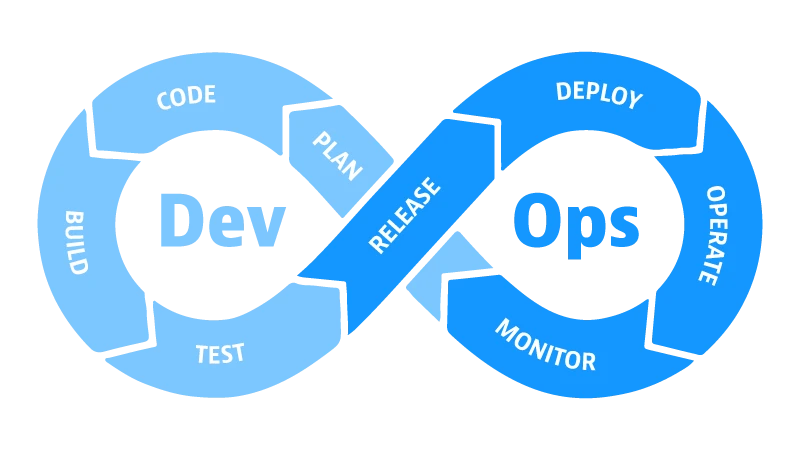
DevOps is a combination of cultural practices, philosophies, and tools that enhance an organization’s capability to deliver applications & services at high speed. This means developing and improving products at a quicker pace than organizations that use traditional S/W development and infrastructure management processes. This speed validates organizations to better serve customers and compete more productively in the market.

DevOps Working Process:

In the DevOps model, development and operations teams are no longer “siloed”. In some cases, these two teams are combined into one team, where engineers work throughout the application lifecycle from development and testing to deployment and operations, developing a variety of skills that are not limited to a single function.

For some DevOps models, quality assurance and security teams may also be more tightly integrated with development and operations throughout the application lifecycle. If security is the focus of everyone on the DevOps team, this is sometimes referred to as DevSecOps.

These teams use practices to automate previously manually time-consuming processes. They use technology stacks and tools to help them operate and evolve their applications quickly and reliably. These tools also help engineers perform tasks independently (for example, code deployment and infrastructure provisioning). This usually requires the help of other teams, further speeding up the team.

Benefits of DevOps

Bringing together development and operations teams reduces lead times, deploys more often, and creates higher quality software.

Reliability:

Ensure the quality of application updates and infrastructure changes to ensure delivery at a faster pace while maintaining a positive experience for end users. Test that each change is functional and secure, using techniques such as continuous integration and continuous delivery. Monitoring and logging practices can help you get real-time performance information.

Speed:

Moving fast enables you to innovate quickly for your customers, adapt better to changing markets, and drive business outcomes more efficiently. The DevOps model allows developers and operations teams to achieve these results. For example, microservices and continuous delivery allow teams to take ownership of the service and release service updates more quickly.

Faster delivery time:

Increase the frequency and pace of releases to enable your products to innovate and improve faster. The faster you release new features and fix bugs, the faster you can respond to your customers’ needs and build a competitive advantage. Continuous integration and continuous delivery are techniques that automate the software release process from build to deployment.

Scale:

Operate and manage infrastructure and development processes at a scale. Automation and consistency helps you to manage complex or changing systems more efficiently with low risk. For example, infrastructure as code helps you manage your development, production, and testing environments in a repeatable and more powerful way.

Improved Collaboration:

Create a more effective team according to the DevOps cultural model, which emphasizes values ​​such as ownership and accountability. Developers and operations teams work closely together, share many responsibilities, and integrate workflows. This reduces inefficiencies and saves time (e.g. reduced handover time between developer and operation, writing code that takes into account the open environment).

Security:

Move fast while maintaining control and maintaining compliance. With automated compliance policies, good controls, and configuration management techniques, you can use the DevOps model without sacrificing security. For example, using infrastructure as code and policies as code, you can determine and track compliance at scale.

Why DevOps Matters:

Software and the Internet have changed the world and the industry, from shopping to entertainment to banking. Software is no longer just about supporting your business. Rather, it becomes an integral component of every part of the business. Enterprises interact with their customers through online services or applications, and through software delivered on all types of devices. We also use software to improve operational efficiency by transforming all parts of the value chain, including logistics, communications, and operations. Just as physical commodities companies used industrial automation to transform the way they design, build, and deliver products throughout the 20th century, today’s companies around the world are building and delivering software. Need to change.

We can assist you in connecting your devices to a customized mobile application.