Categories
insights

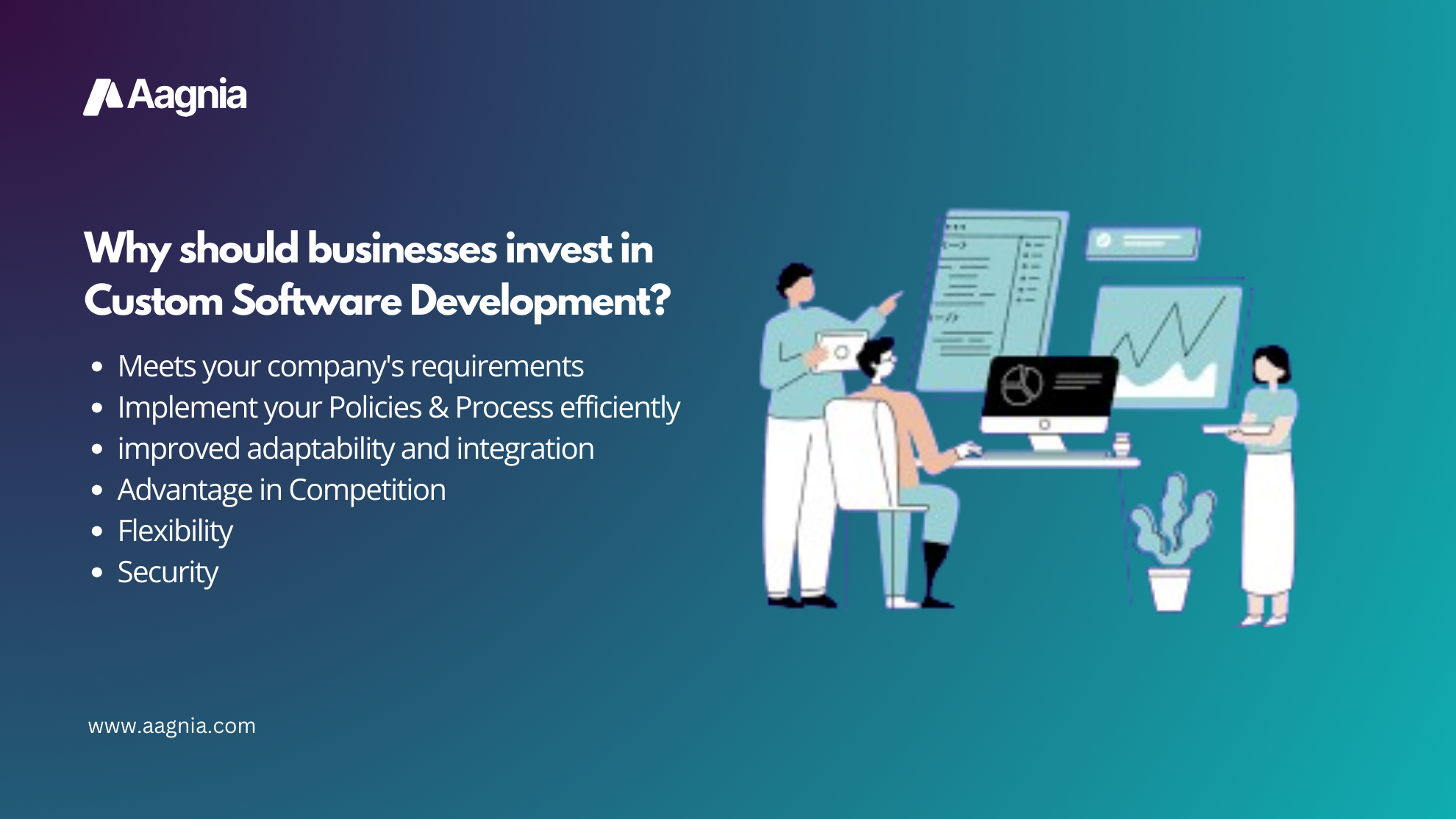
Why should businesses invest in Custom Software Development?

Why should businesses invest in Custom Software Development?

When businesses choose custom software development, they have the freedom to build new capabilities on top of existing enterprise applications, saving significant effort in development and lowering cost escalation.

Let us try to define custom software development:​

It is the process of creating, deploying, and maintaining software for a specific organization or group of users who intend to perform a specific function.

Consider a bank that has a custom application developed for online banking to meet the specific needs of its customers and the bank. 

Consider another manufacturing company that might require software to streamline its unique processes. As a result, the significance of custom software development is enormous. 

Let’s look at how custom software can be used to solve business problems and drive growth.

Many businesses require custom software development to enhance the functionality of their applications by modifying, integrating, or customizing them. Furthermore, custom software aids in the scaling of your business to meet the changing needs of your customers and the market.

What are the benefits of custom software development for businesses?

Do you want to know how custom software can help your business? Here is a list of a few of the many advantages that you can obtain by using custom software development services.

This list will be useful if you are looking to develop custom software or simply have your existing software modified. Let’s get started!

Efficiency:

Because it is now tailored – according to your business needs – custom software helps to increase productivity by making processes faster. 

You will not have to invest time or change your business processes to accommodate the standardized software.

Easy Integration with Low Costs:

Do you intend to purchase commercial software? One of your most pressing concerns may be whether your software will work with existing applications. 

You can save money by having custom software built and integrating it with your other business applications.


Tools from various vendors may be useful in various areas of your business operations. 

However, each of these tools may have unique technology infrastructure requirements, architectural differences, development methodologies, and levels of implementation support.

 Your organization’s technology ecosystem must function as a streamlined single unit capable of delivering value across the board.


Integrating systems from multiple vendors requires significant effort, which may outweigh the benefits provided by individual systems.

Such a scenario necessitates the development of a suite of operational enterprise applications tailored to your company’s goals.

Every custom software built in this manner would adhere to common development and execution standards, resulting in a flexible and interoperable enterprise technology stack.

Profitability has increased:

Many of your business’s problems can be solved with custom software. However, wouldn’t it be fantastic if you could profit from your custom-built software? Depending on the terms and conditions of your business projects, you can license or sell the software to other organizations.

Scalability:

The business processes in your organization will become more complex as it grows. This is not an issue with custom software development because you can scale your software accordingly.

As a result, you will avoid incurring costs for additional licensing or subscriptions for additional features.

Support from existing technology:

Businesses frequently invest in new digital solutions by blindly following market trends. It’s possible that the technology they already have only needed a few tweaks and upgrades to provide the same or even better features that a completely new commercial off-the-shelf software can. Introducing a new digital solution from a vendor into your existing technology ecosystem can create challenges not only in systems integration, as mentioned above, but also in maintaining existing software that serves other core business processes.


When businesses choose custom software development, they have the freedom to build new capabilities on top of existing enterprise applications, saving significant effort in development and lowering cost escalation.

 Having a team to customize existing software is a better option than hiring one to implement a third-party solution from the ground up and then follow it up with costly customisation to further suit your business’s requirements and objectives.

Independence:

Many lags occur simply as a result of dealing with the software vendor. With custom software development services, you will save a significant amount of time that can be used to be more productive. You no longer need to be concerned about price increases when purchasing a license for your packaged software.

Security:

Another advantage of custom software is that it is more secure than boxed software. This makes your software less vulnerable to security flaws.

Custom Software Design & Development:

You can maintain consistency in appearance and different behavior patterns with bespoke software. As a result, your software design can be tailored to your company’s style with no design constraints. As a result, rather than conforming to the limitations of boxed software, you can maximize your business potential.

Importance of custom software development:

Why is custom software development important? Custom software development is essential because it helps you to meet unique requirements at a lower cost than purchasing, maintaining, and modifying commercial software.

Why custom software development is important for your business?

Custom software development is important because it allows for the fulfillment of specific requirements at a lower cost than purchasing, maintaining, and modifying commercial software.

Some of the advantages are as follows: Efficiency, Scalability, Lower integration costs, Profitability, Independence.

What is a custom software development company?

Custom software development is the creation of software applications for a specific user or group of users within a company. It entails ordering, developing, and releasing a software product that is tailored to a single detailed unit.

Do you require Custom App Development?

Looking for experienced App Developers to create a web app from the ground up, or do you want us to get started on an existing project? Get your no-obligation expert consultation today!

Categories
insights

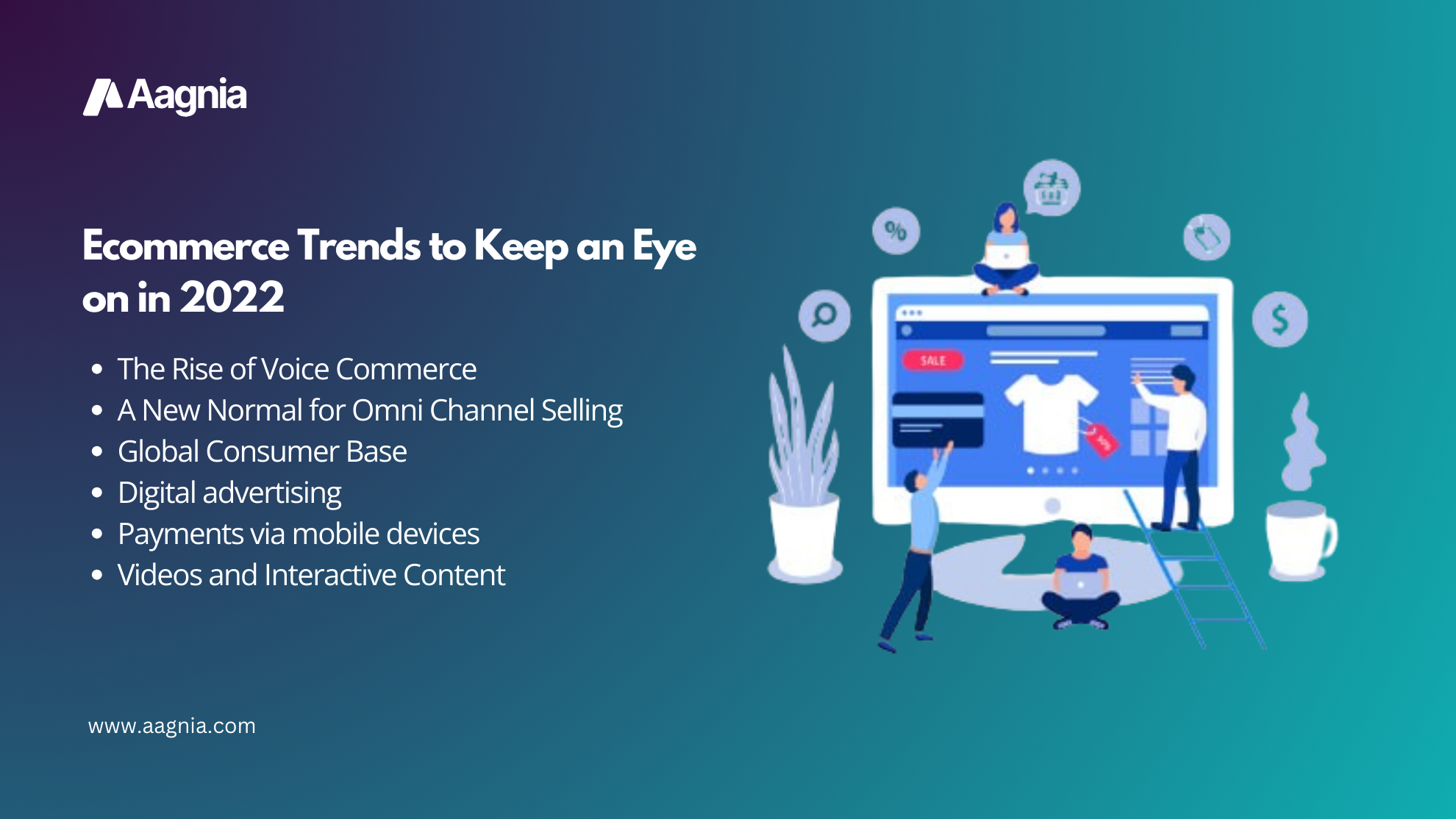
Ecommerce Trends to Keep an Eye on in 2022

Ecommerce Trends to Keep an Eye on in 2022

E-commerce is an essential part of everyone’s life, as we are all well aware of the benefits of online shopping.


E-commerce sales have increased dramatically as a result of the pandemic in 2020.


Aside from this rapid shift in online shopping, it has also been discovered that mobile and digital media consumption has increased dramatically.


In 2019, e-commerce sales were $3.53 trillion, and this figure is expected to rise to $6.54 billion by 2022-23.


Measuring the increase in online business, most retailers are shifting their focus to this expanding industry.


As a result, it is critical for every business to understand the value of e-commerce as well as the top trends to look for in 2021.

The Rise of Voice Commerce:

Blue-White-Simple-Financial-Tips-Blog-Banner-_19_

Most people are increasingly using voice assistant devices, whether for searching or purchasing a product from an online store.


Devices such as Alexa and Google Assistant are assisting people in making their tasks easier and smarter through voice search; every retailer should use this technology. To begin optimizing your store for voice search now, as more than 70% of US households will have smart speakers by 2024-25.


When you optimize your store for Voice Search, you will be able to meet the needs of your customers and provide them with the ease and convenience of shopping.


You will be astounded if we tell you that “Voice Commerce is expected to reach $40 billion in revenue by the end of 2022.”

A New Normal for Omni Channel Selling:

Blue-White-Simple-Financial-Tips-Blog-Banner-29

According to a survey conducted by Harvard Business Review, people use multiple channels when shopping online across multiple platforms. The number of omnichannel customers is expected to increase in 2021 as well.


Many businesses are already aware of their customers’ use of multiple channels such as mobiles, tablets, desktops, and so on.


To benefit your online business through Omnichannel selling, optimize your website for mobile use. It will assist you in increasing your sales.


You can also create a mobile application or a PWA (Progressive web app) to provide your customers with a seamless Omnichannel experience.


Allow your customers to buy your products in a variety of ways, such as buy online, pick up in-store, choose home delivery, get doorstep delivery, and so on.

Global Consumer Base:

Blue-White-Simple-Financial-Tips-Blog-Banner-30

Global e-commerce allows products to be sold across geopolitical borders. According to the most recent updates, the cumulative date predicts a 276.9 percent increase in global e-commerce sales.


It has been discovered that a large number of online shoppers want to buy outside of their country’s borders.


To increase your sales abroad, you must conduct a market analysis using platforms such as online advertising or social media. You will need to approach Google Ads, Facebook, Instagram, and Product Listing Ads using geographic targeting for this.


Because of the global nature of the search, local businesses can reach out to an international audience to sell their products.

Digital advertising competition:

Blue-White-Simple-Financial-Tips-Blog-Banner-31

In most OECD (Organisation for Economic Co-operation and Development) countries, digital advertising has surpassed traditional forms of advertising.


Because of the increased use of the internet and mobile phones, the level of digital advertising has increased. Because of advancements in artificial intelligence and other areas, it is now possible to reach out to targeted audiences through low-cost digital advertising.


More businesses are planning to continue large investments in digital advertising in 2022.

Payments via mobile devices:

Blue-White-Simple-Financial-Tips-Blog-Banner-33

Mobile payments have become an easy and convenient way for both retailers and consumers to make digital payments. It is one of the most advanced technologies, and it is gradually increasing the rate of e-commerce sales. It is now a requirement for any online shopping platform to include their customers’ online payment method.


People used to use mobile payment methods during the pandemic because there was a risk of being exposed to the coronavirus.


More e-commerce businesses are expected to accept mobile payment methods in 2022.

Videos and Interactive Content:

Videos are an important aspect of the online business world. After watching a well-informed and appropriate video, 7 out of 10 people have a positive reaction. Around the world, 80 percent of millennial use videos to decide whether or not to buy an online product.

Interactive videos can be used on any platform, including YouTube, Instagram, and Facebook.

Shoppable videos are the new frontier in the world of e-commerce. Consumers can purchase the product directly from the video by using the Pop-up or Swipe features available on various social media platforms.

The shoppable videos can be used by brands in any e-commerce space, including fashion, beauty, and technology.

Prepare for all of these trends in 2022 to boost the performance and value of your brand.

It will be critical to understanding the potential of your product and add-ons in order to attract the audience.

Brands must optimize their website and app based on customer feedback. It will be beneficial in developing a strong customer relationship with the brand.

Do you require Custom App Development?

Looking for experienced App Developers to create a web app from the ground up, or do you want us to get started on an existing project? Get your no-obligation expert consultation today!

Categories
insights

React Native vs Flutter: Which one is better for Platform Independent?

React Native vs Flutter: Which one is better for Platform Independent?

Do you have a preference between React Native and Flutter? Discover the distinction between these two, as well as the benefits and drawbacks of each.

Flutter and React Native are the most popular frameworks for developing modern cross-platform mobile applications. Without a doubt, native platform-specific API-based development remains the technically best approach for creating smooth and high-performance mobile applications. Maintaining separate native codebases for each mobile operating system, on the other hand, is time-consuming and inconvenient for development teams. As a result, every development team now chooses either Flutter or React Native to build mobile apps.

Then, as with any other framework or technology stack, we ask ourselves a single question. Which is superior, Flutter or React Native? Flutter’s near-native performance and rich widgets toolkit may sway some developers’ votes. Meanwhile, some developers prefer React Native because of its developer friendliness and support for platform-specific widgets.

However, for most businesses, developing native apps for each platform is an insurmountable time investment. As a result, they are looking for technologies that will aid in the development of cross-platform mobile applications. And it is at this point that they begin to wonder which is superior: Flutter vs. React Native? Hybrid apps are, indeed, the best solution for the business. The hybrid app market is rapidly expanding, and it appears that hybrid apps will displace native apps within a few years.

So, why are Flutter and React Native so popular? Obviously, native applications perform better on mobile devices. Users with a technical background will notice that graphic transitions take less time for UI rendering than cross-platforming. However, the difference will be almost imperceptible to a random user. As a result, they begin to weigh the benefits of Flutter vs. React.

All native frameworks use codes that communicate directly with the IS core. However, depending on the operating system and device, native frameworks are written in different programming languages. As far as we can tell, developing a native app for Android and iOS will necessitate the involvement of at least two developers. However, the mobile world is not limited to the operating system. There are too many peculiarities that necessitate more developments, which necessitate more spending.

A company must hire Java, C, and C++ developers to develop an Android app. iOS developers who are familiar with Objective C and Swift must be hired. These costs are unaffordable for small and medium-sized businesses. So why pay more when you can choose between React vs Flutter, a cheap and quick way to build an app? In a nutshell, the following aspects are included in the list of hybrid app platform benefits:

Hybrid apps are less expensive. Developing an app on Flutter or React Native saves time and produces results that are nearly as satisfying as those produced by native apps.

They require less time to develop. Time is a valuable commodity. As a result, when a company saves development time, it also saves money.

They provide offline assistance. There is no need to contact support if there is a problem with the code. All answers can be found in offline libraries. A developer only needs to know where to look for them.

Hybrid apps are less difficult to maintain. With all of the system updates, it may be difficult to track how the updates affect different codes. This is no longer an issue with hybrid apps because you only have one code for all applications.

They are compatible with both the iOS and Android operating systems. There is no need to invest more time and money in developing another app.

They allow for simple integration with third-party apps.

Hybrid apps are frequently regarded as the best for an online marketplace. And it is correct. The benefits are numerous, while the drawbacks are so minor that they can be overlooked.

So, why should we develop native apps when we can create hybrid apps? In cross-platform development, there are two ideal solutions: Flutter vs React Native. They both have a plethora of features, and open-source frameworks, and are powerful enough to create almost any application. A new question arises at this point: which is better for development, Flutter or React Native? This article will attempt to provide an answer to this question.

What is flutter?

Google’s Flutter is a cross-platform framework. It was first released in May 2017 and has since grown rapidly in popularity among developers. When we compare React Native vs Flutter 2021 statistics, we can see that Flutter is becoming more popular among developers. Kenya, China, Bangladesh, Japan, and Jordan have chosen this framework. In comparison to 2020, when 30% chose Flutter, this number increased to 39% in 2021.

What makes Flutter so unique? First and foremost, it is the ability to develop cross-platform applications from a single codebase. It eliminates the need to create separate apps for the web, mobile, and desktop. With Flutter, there is now a single tool that makes it simple to develop apps.

No more sacrificing speed, quality, or performance – Flutter enables the creation of beautiful apps from a single codebase. Flutter is made up of a Dart framework. The rendering engine is primarily written in C++. It’s worth noting that apps built with Flutter are more intuitive and easier to use. The issue is that app developers can modify UX using this framework. This procedure necessitates the modification of a variable in the state. This is a critical point to consider when comparing React Native and Flutter.

Although Flutter is one of the fastest cross-platform frameworks for app development, development time is slower than in React Native. The issue is that when working with Flutter, it is necessary to include separate code files for Android and iOS systems. However, this occurs only when an app necessitates more complex UI elements. Flutter, on the other hand, has access to a number of third-party UI libraries with ready-to-use components. As a result, the development time can be reduced. And, to be honest, these libraries make the development process easier.

Another fantastic feature of Flutter is “Hot Reloading” or “Hot Restart.” Because of these features, a developer can see all changes in real-time.

What is React Native?

Another popular cross-platforming framework created by Facebook engineers is React Native. Apps like Facebook, Instagram, Pinterest, Uber Eats, Walmart, and Tesla are built with React Native. Every day, the popularity of React Native grows, and more and more developers prefer it over other options. React Native is built on top of ReactJS. It employs JavaScript to develop a mobile app for both Android and iOS. In addition to Flutter, it enables the development of an app with a single codebase.

React Native now has a large community, making it the most popular cross-platform development tool.

React Native is well-known for its quick development time and access to a few third-party UI libraries with ready-to-use components, which allows for time savings during development. It also allows for the immediate delivery of new functionalities to supported platforms, which saves time. React Native, like Flutter, has several features that simplify and accelerate the development process. It also has a Hot reload feature, for example. It means that a developer can make changes instantly and see the results.

React Native is simple to set up, but unlike Flutter, it generates packages. Some developers find it vexing, but for many, it is unimportant. Only UI rendering and device access APIs are provided by React Native. It implies that the framework is dependent on third-party libraries. And it is up to them. In this Flutter vs. React comparison, Flutter wins. So, in terms of development, which is better, Flutter or React Native? React Native appears to have the upper hand.

Do you require Custom App Development?

Looking for experienced App Developers to create a web app from the ground up, or do you want us to get started on an existing project? Get your no-obligation expert consultation today!

Categories
insights

Mobile Application Development

Mobile application development is the process of developing application software that runs on a mobile device, and a typical mobile application works with remote computing resources via a network connection. As a result, the mobile development process entails creating installable software bundles (code, binaries, assets, and so on), implementing backend services like data access via an API, and testing the application on target devices.

Alternatives to Developing Mobile Apps:

When creating mobile applications, there are four major development approaches to consider.

  • Native Mobile Applications
  • Hybrid Mobile Applications
  • Progressive Web Applications
  • Cross-Platform Native Mobile Applications

Each of these methods for developing applications has its own set of benefits and drawbacks. Developers consider the preferred user experience, the computing resources and native features required by the app, the development spending plan, time targets, and resources available to maintain the app when deciding on the best development approach for their projects.

Comparing Native vs. Hybrid Application Development:

At the highest level, there are a few ways that native apps differ from hybrid apps.

Native

  • Specific to the Platform
  • Language Compilation
  • Device Hardware Access
  • Frameworks for Platforms

Hybrid:

  • Platform-Independent
  • Scripting / Compilation
  • Native Modules / Plugins
  • Web Frameworks

Key Mobile Application Development Services:

There are hundreds of cloud and third-party services available to mobile app developers to help them accelerate the development and delivery of their applications. A developer, on the other hand, is unlikely to become an expert in each of these individual services.

Instead, mobile developers should look for a development environment that allows them to quickly and easily integrate, use, and consume the most commonly required capabilities into their application, while still allowing them to take advantage of the many individual services available.

Fundamental:

User Sign-up / Sign-in

Social login (Google, Facebook, Twitter sign-in, etc.)

User Engagement and Analytics

Notifications

Real-World Device Testing

Data Services:

Online and Offline Data

Cloud Functions/Application Logic

Cloud Storage

Artificial Intelligence (AI) & ML

Chat Bot

Recognition of images and videos

Speech Recognition

Categories
insights

Is offshore development relevant still?

Is offshore development relevant still? (Outsourcing)

Why is there an offshore development?

Offshore software development allows businesses of all sizes to access the same skilled labor force, lowering costs and the time required to develop software. Freeing up time allows you to focus on your strengths and core operations, allowing you to work toward long-term business growth.

In 2022, there will be an increase in offshore software development.

Offshore software development is a clever solution for meeting your organization’s business needs in software engineering. It’s okay if what’s right in front of you isn’t always the best answer.

Stay tuned to learn more about how offshore software development can benefit your company. The information provided below will familiarise you with the fundamentals of offshore software development.

What Are the Advantages of Outsourcing Software Development?

Improved Product Quality. Offshore outsourcing is one of the most effective methods for connecting with talent and acquiring high-quality services. When you outsource your software development, you gain access to a larger pool of talent and higher-quality code.

Cost-Effectiveness:

Development, you gain access to a larger pool of talent and higher-quality code. In-house custom software development can be both costly and difficult. Payroll procedures are time-sensitive and necessitate the services of a specialized and salaried human resources specialist. Management overhead is also a major drain on the budget.

Categories
insights

Industrial Revolution(5.0 Key Elements)

Industrial Revolution(5.0 Key Elements)

What is Industry 5.0:

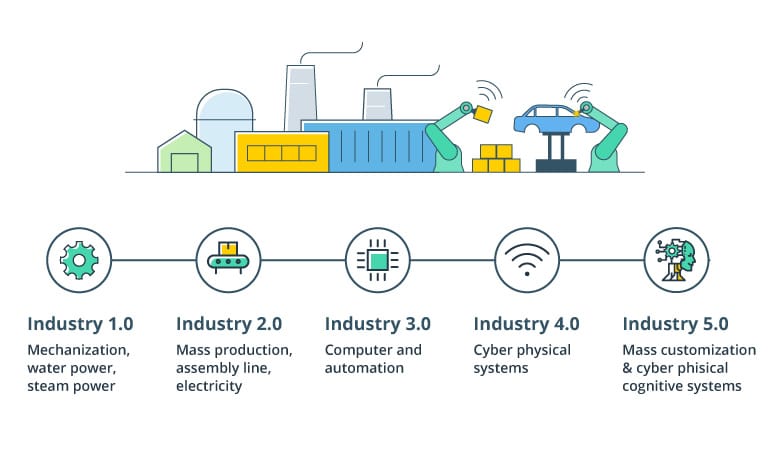
People working alongside robots and smart machines are referred to as Industry 5.0. It is about robots assisting humans in performing better and faster tasks by utilising advanced technologies such as the Internet of Things (IoT) and big data. It gives the Industry 4.0 pillars of automation and efficiency a personal human touch.

  • Human-Centric design for industry & Society.
  • Focus on environmental and social sustainability. 
  • Mission Driven companies over profit-driven.
  • Widespread use of the metaverse.

Key Elements of Industry 5.0:

100% of Companies are Mission-Driven and Values-Based

Robotics and Automation Complement human and do not overtake them

Environmental, Political and Social Sustainability at the forefront of Design

Humans are working more creative jobs and less monotonous and dangerous jobs 

Humans are working fewer hours and may not need to work at all

Virtual Reality technology will create a new economy in the metaverse

Powered by the widespread implementation of industry 4.0 Manufacturing

Whether you ready or not, Industry 5.0 has arrived. While many manufacturers are still working on ways to connect new technologies to improve efficiency and productivity — the guiding principle behind Industry 4.0 — the next phase of industrialization has already begun.

Robots have traditionally performed dangerous, monotonous, or physically demanding work in manufacturing environments, such as welding and painting in car factories and loading and unloading heavy materials in warehouses. As machines become smarter and more connected in the workplace, Industry 5.0 aims to combine cognitive computing capabilities with human intelligence and resourcefulness in collaborative operations.

The combination of human and machine workers opens up a wide range of opportunities in manufacturing. And, because Industry 5.0 use cases are still in their early stages, manufacturers should be actively strategizing ways to integrate human and machine workers in order to maximise the unique benefits that can be reaped as the movement evolves.

Categories
insights

Challenges in DevOps Implementation and Its Solutions

Gitlab CI Pipeline for Laravel app

Continuous Integration is a development practice that requires developers to integrate code into a shared repository several times per day (repos in subversion, CVS, git). Each check-in is then verified by an automated build, allowing everyone to detect and be notified of problems with the package immediately.


Build Pipeline is a process by which the software build is broken down in sections: 

  1. Unit test 
  2. Acceptance test 
  3. Packaging 
  4. Reporting 
  5. Deployment 
  6. Notification


The concepts of Continuous Integration, Build Pipeline and the new “DevOps” movement are revolutionizing how we build, deploy and use software. Gitlab is providing the automated pipeline which we need to use the gitlab.yml file.


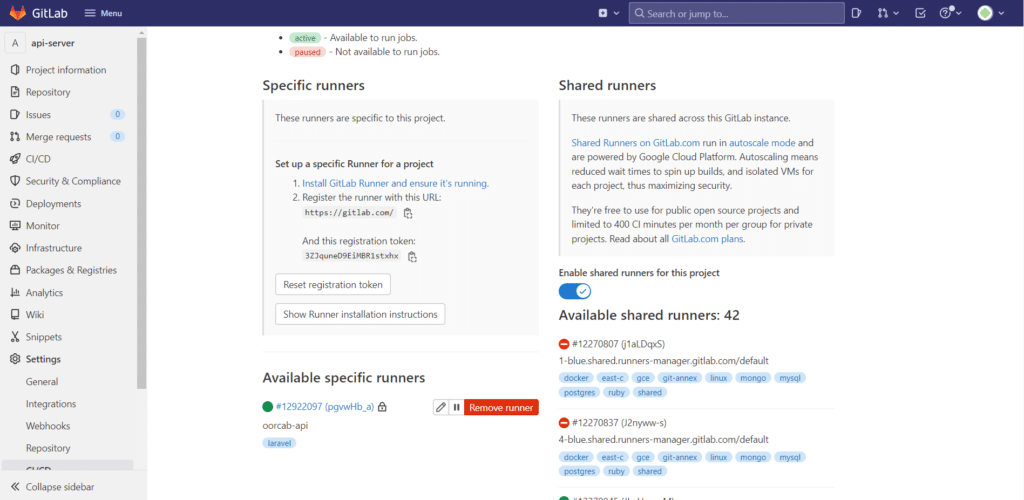
I am unable to find the docker image which is appropriate for the php version and composer version we are using in our app. So I go with a manual gitlab runner.


Gitlab runner configuration: I installed the gitlab runner and initialized it in the aws ubuntu ec2 instance with the following steps:


# Download the binary for your system

sudo curl -L –output /usr/local/bin/gitlab-runner https://gitlab-runner-downloads.s3.amazonaws.com/latest/binaries/gitlab-runner-linux-amd64


# Give it permissions to execute

sudo chmod +x /usr/local/bin/gitlab-runner


# Create a GitLab CI user

sudo useradd –comment ‘GitLab Runner’ –create-home gitlab-runner –shell /bin/bash


# Install and run as service

sudo gitlab-runner install –user=gitlab-runner –working-directory=/home/gitlab-runner

sudo gitlab-runner start


For registering the runner in use the following command: 


sudo gitlab-runner register –url https://gitlab.com/ –registration-token $REGISTRATION_TOKEN

After installation, I tried to use the entire ec2 instance as a runner which will be more easy to deploy the application by using ssh as executor. I added pem file as the ssh key in the gitlab cicd variables and also stored the key in ec2 instance  location /home/ubuntu/.ssh. This runner uses aws environment as its own environment and doesn’t need anything to install. 

 But this runner failed because due to some configuration in the AWS EC2 instance while I logged into the instance with root through the pipeline, it logged out automatically. So I rewrote the config file of gitlab runner (replaced executor as shell). This change allows Pipeline to login to the instance, but doesn’t allow the git to pull the files. 


SSH Key generation and adding to Gitlab: To allow the git to pull the files from gitlab add the ssh key into the gitlab account. Generate ssh key by using 

ssh-keygen -o -f ~/.ssh/id_rsa


This generates an rsa ssh key.

Then move to the  /root/.ssh folder and create config file with below code:


Host gitlab.aagnia.com

   HostName gitlab.com

   AddKeysToAgent yes

   #UseKeychain yes

   User git

   PreferredAuthentications publickey

   IdentityFile ~/.ssh/id_rsa1


This allows git operations inside the server (Install the git and use git init before running the pipeline) through the pipeline. Now run the pipeline from the gitlab account.

To set up a gitlab cicd pipeline for an laravel application to host in the aws server, we used the following code as .gitlab-ci.yml:  


stages:

    – build

building:

  stage: build

  script:

    – cd <path/to/directory>

    – sudo git checkout dev

    – sudo git pull 

    – sudo cp .env.example .env

    – sudo composer install

    – sudo php artisan config:cache

    – sudo php artisan config:clear

    – sudo php artisan cache:clear

    – sudo chown -R root:root <path/to/directory>

    – sudo chmod -R 777 <path/to/directory>

  only:

Categories
insights

Importance of Data analytics for Business

The Importance of Data Analytics for Business

Data analytics

As a business owner, Analytics helps you to analyse your business and your customers.

Data Analytics gives you endless amounts of data available with just a click! Computers and the internet have made it easy for us to collect and analyze all kinds of data. As a business owner, you could use this data analytics information to help you to do business analysis and improve.

You could collect different types of aspects of your business,including market research, product research and sentiment analysis much more., 

Demographics:

When you gather information about your customers or clients, you start to analyse who your customers are, where they live, their age, gender, behaviour, and spending habits. Then you will segregate which group of data gives you more profit and improve your business.

Improving Efficiency:

All the data collected from the businesses, not only collect individual data or external to the organisation. The data collected by the businesses are analysed internally. Here a lot of advanced technologies help you to collect the data. This data helps to know the performance of customers and also business.

Improve customer service:

You can research sentiment analysis to understand what customers think about our business online sentiment analysis is taking texts and analyse If it is positive, negative or neutral text. You could analyse based on customer comments and you can see why?

Then you can see where you could improve your business, this will enhance your customer service because you will analyse the things.

Customer Behaviour:

You can use data analytics to predict your customers behaviours, analytics show you how many visitors came, pageviews, session Durations etc.Analytics gives you  how many customers clicked on your website more than once. Which could predict that they will be back in a month, you could look at those customers to create loyalty with exclusive deals for them.then the customers who only visited your site once, you can come up with another strategy on how to get back to repeat customers. It is possible you may need to change some things on your website.

Decision making:

If you have the data to check, it will make your business decisions more comfortable because it is backed by facts. You can use the collected data to see what works and what needs to be improved or completely removed.

If one product sells very well, it is advisable to invest more time and energy in developing similar items. On the other hand, if it is difficult to sell, you can either stop selling or reduce the price.

If the data shows that your customers want better service or need something more, you can invest in training to meet the expectations of your employees. But if people are happy with their experience, you can use it to save your money and improve other areas of your business.

Knowing how a company behaves based on facts, not just emotions, makes decision making much easier.

Overall, companies need to look at data analysis to get accurate reports on various aspects of their company. This information can bring light to things you may not even know would hurt your business.

You can use this data to understand customer demographics, improve customer service, predict future customer behavior, and assist in business decisions.

Categories
insights

Cloud-Based Operating Models

Cloud-Based Operating Models


In addition to supporting more efficient technology operations, cloud computing has helped improve collaboration between employees across teams, departments, and regions.

Collaboration:

Remote work isn’t a new phenomenon, but it’s become much more common these days, and the rise of cloud collaboration platforms makes this approach more viable. Secure networks, conferencing, and communication platforms have become an integral part of modern organizations. Adroit Market Research predicts that the enterprise collaboration market could reach $ 45 billion by 2025 as more employees choose real-time communication. Collaboration platforms are also becoming more sophisticated, from real-time updated spreadsheets and other types of work management software to advanced data warehouse modeling tools that keep teams up to date across regions.

Virtual cloud desktops:

Virtual cloud desktops, also known as desktop-as-a-services, deliver the entire desktop operating system and software applications directly to laptops, desktops, or other devices as cloud-based services. Enterprises pay only for the time staff spend logging into their devices, not for hardware upgrades. Virtual cloud desktops can also be expanded instantly. In short, enterprises always have the licenses and devices they need to support an ever-growing number of employees. According to Allied Market Research, the global market for virtual cloud desktops is projected to reach $ 10.2 billion by 2023, with a compound annual growth rate of 16.5% since 2017.

Cloud costs:

The initial cost of cloud computing is much lower than the cost of purchasing and setting up your on-premises IT infrastructure and systems. The same applies to the need for hardware and software maintenance and upgrades and the cost of the staff responsible for those duties. However, that doesn’t mean that moving to the cloud is always a cheap proposal. If not properly managed, the variable cost nature of the cloud can exceed your budget and increase your total cost in the long run.

Why are cloud services becoming more popular?

This allowed us to quickly adapt and meet the ever-changing needs of businesses and their employees. Cloud computing can handle large amounts of data and facilitate global deployment, enabling enterprises to create more innovative and dynamic ways of working.

Cloud services have become so popular in part because cloud storage is so much more secure than a local server. … As a result, Partner, a global IT service management company, expects cloud storage to become one of the most popular small businesses data protection options.

What are the latest cloud technologies?

Edge, Serverless, SASE, Cloud Migration and Data Privacy, Automated Cloud Orchestration, Multi-Cloud.

Categories
insights

Innovation and Application

Innovation and Application Development

In addition to supporting more efficient technology operations, cloud computing has helped improve collaboration between employees across teams, departments, and regions. Collaboration: Remote work isn't a new phenomenon, but it's become much more common these days, and the rise of cloud collaboration platforms makes this approach more viable. Secure networks, conferencing, and communication platforms have become an integral part of modern organizations. Adroit Market Research predicts that the enterprise collaboration market could reach $ 45 billion by 2025 as more employees choose real-time communication. Collaboration platforms are also becoming more sophisticated, from real-time updated spreadsheets and other types of work management software to advanced data warehouse modeling tools that keep teams up to date across regions. Virtual cloud desktops: Virtual cloud desktops, also known as desktop-as-a-services, deliver the entire desktop operating system and software applications directly to laptops, desktops, or other devices as cloud-based services. Enterprises pay only for the time staff spend logging into their devices, not for hardware upgrades. Virtual cloud desktops can also be expanded instantly. In short, enterprises always have the licenses and devices they need to support an ever-growing number of employees. According to Allied Market Research, the global market for virtual cloud desktops is projected to reach $ 10.2 billion by 2023, with a compound annual growth rate of 16.5% since 2017. Cloud costs: The initial cost of cloud computing is much lower than the cost of purchasing and setting up your on-premises IT infrastructure and systems. The same applies to the need for hardware and software maintenance and upgrades and the cost of the staff responsible for those duties. However, that doesn't mean that moving to the cloud is always a cheap proposal. If not properly managed, the variable cost nature of the cloud can exceed your budget and increase your total cost in the long run. Why are cloud services becoming more popular? This allowed us to quickly adapt and meet the ever-changing needs of businesses and their employees. Cloud computing can handle large amounts of data and facilitate global deployment, enabling enterprises to create more innovative and dynamic ways of working. Cloud services have become so popular in part because cloud storage is so much more secure than a local server. ... As a result, Gartner, a global IT service management company, expects cloud storage to become one of the most popular small businesses data protection options. What are the latest cloud technologies? Edge, Serverless, SASE, Cloud Migration and Data Privacy, Automated Cloud Orchestration, Multi-Cloud.

IT security and data compliance are major concerns for both enterprises and customers, and today’s cloud solutions have evolved to address these concerns. Vendors offer state-of-the-art data control and protection that reduces the risk of human error when managing sensitive data.

Complexity of compliance:

Compliance is a company’s priority as companies collect more data from more and more sources and governments enact data protection regulations such as the General Data Protection Regulation (GDPR) and the California Consumer Privacy Act (CCPA). It is a matter. Cloud storage and applications improve access to business data and give enterprises more control over how information is managed. Data governance has become a central consideration for all IT investments, especially when implementing solutions that process sensitive financial data and other personal information about customers.

Better cloud security:

IT security threats are increasing. For example, the number of global ransomware attacks in which cybercriminals steal corporate data and hold them hostage until the ransom is paid increased nearly five-fold in 2020. Leading cloud providers support their solutions with best-in-class IT security practices. , Mitigates many of the threats.

 SASE:

As employees access more services and data from their devices outside their IT network, companies are rethinking their approach to security and risk management. Gartner’s coined word Secure Access Service Edge (SASE) is a cloud-based IT security approach that addresses the changing nature of work. Companies adopting the SASE architecture all benefit from cloud-based network security services such as secure gateways, firewalls, and zero-trust network access. This is a robust approach to IT security that gives businesses the peace of mind that they are delivering new cloud services quickly and their systems are well protected.

Cloud-based disaster recovery:

According to Forrester, disaster recovery is moving to the cloud, and by the end of 2021 more companies are expected to move on-premises disaster recovery to the public cloud. Similar to traditional disaster recovery, but cloud-based disaster recovery is generally cost-effective and time-efficient, with the added bonus of backing up corporate data to an external cloud server and being managed by an external provider. .. In addition, enterprises can add, modify, and remove data from these external systems as they see fit, without having to extend their own IT infrastructure. Companies also often rely on cloud-based disaster recovery for mission-critical servers and applications such as large databases and ERP systems.