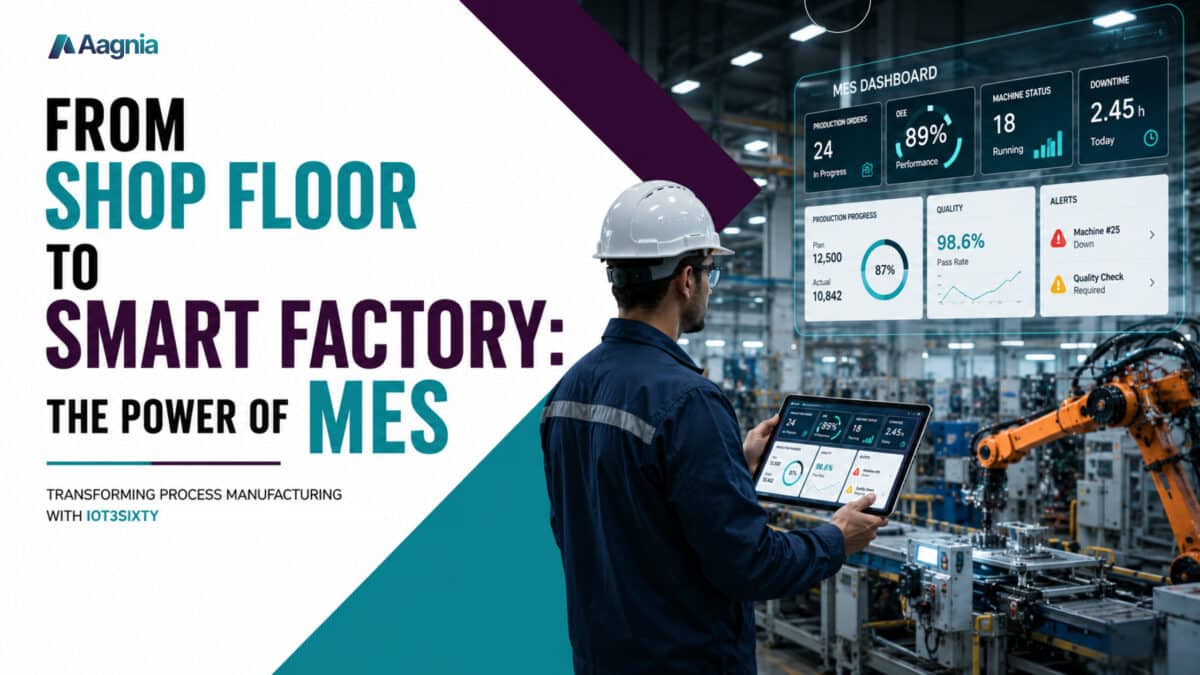
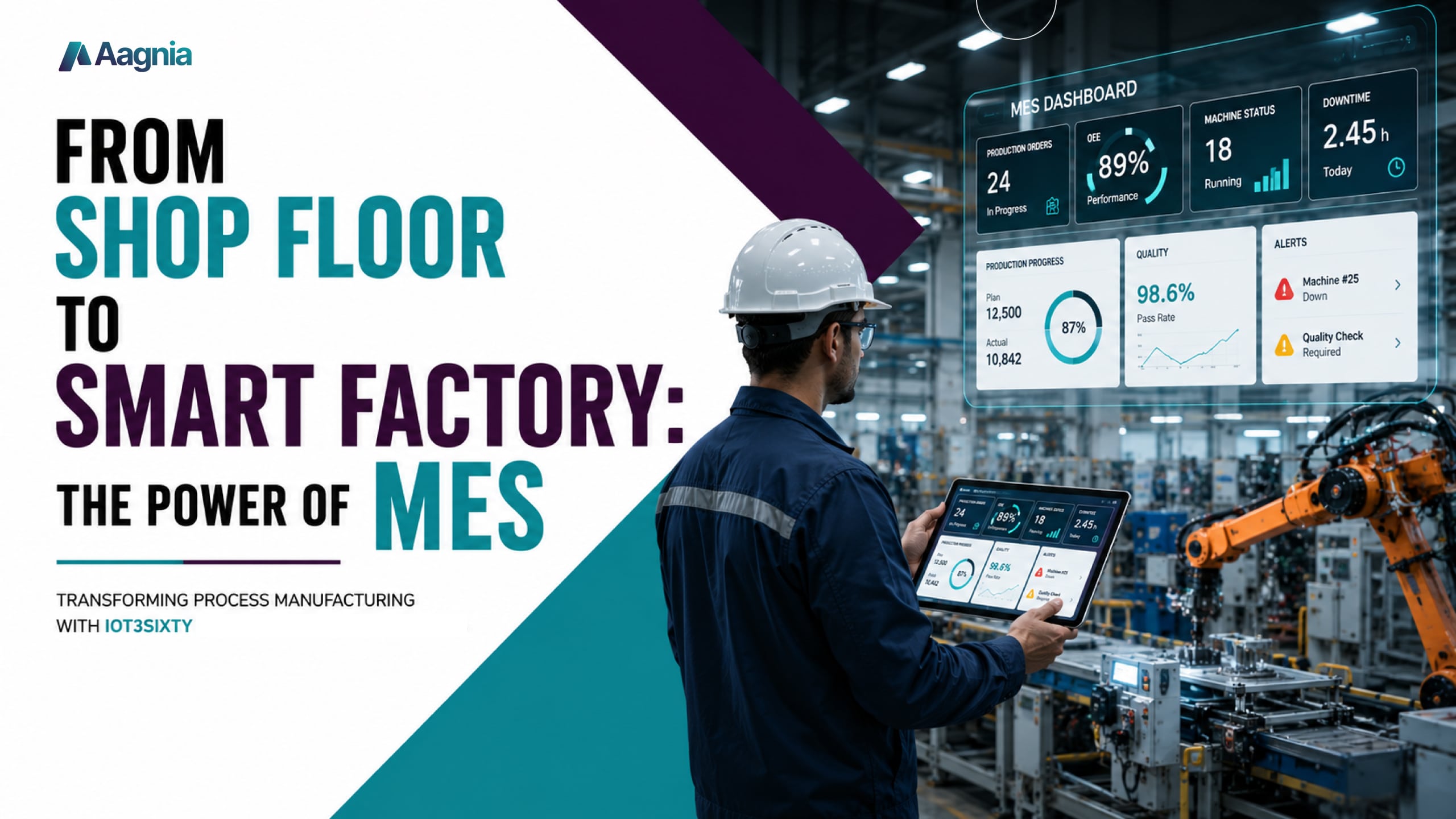
Smart Manufacturing Starts on the Shop Floor: Why Modern Factories Need MES
A production plan can look perfect at 9 AM.
But by noon, reality may look very different.
A machine has stopped unexpectedly. Material consumption is higher than planned. A batch is running behind schedule. Quality needs attention. And the production manager is still waiting for the latest update.
This is one of the biggest challenges manufacturers face today:
There is often a gap between what was planned and what is actually happening on the shop floor.
That is exactly where a Manufacturing Execution System (MES) creates value.
An MES helps connect production activities, machines, materials, quality, and performance information within a more unified manufacturing environment.
What Does MES Actually Do?
ERP is excellent at answering:
“What are we planning to manufacture?”
MES goes closer to the shop floor and helps answer:
“What is happening in production right now?”
Machines Shouldn't Operate Like Information Islands
Knowing whether a machine is ON or OFF is only the beginning.
Manufacturers also need to understand:
- How long was the machine running?
- When did production stop?
- What caused the downtime?
- How is the equipment performing?
- Is the machine delivering the expected output?
With machine monitoring and Industrial IoT (IIoT), equipment data can become part of the wider manufacturing picture.
Instead of finding problems at the end of the shift, teams can identify operational issues much closer to when they occur.
Material Visibility Matters Just as Much
For process manufacturers, material consumption directly influences production cost, traceability, and output.
Production teams need to know:
What was issued → What was consumed → Where it was consumed → What was produced
Connecting material information with production execution creates stronger batch and material traceability while reducing dependency on manually consolidated records.
Quality Shouldn’t Wait Until Production Ends
Quality control works best when it becomes part of production — not simply the final step.
When inspection information is connected with manufacturing execution, teams can identify deviations earlier and respond before they create a larger production problem.
The goal should be:
Detect Earlier → Respond Faster → Produce Better
This approach makes quality information part of the production workflow rather than something reviewed only after production is completed.
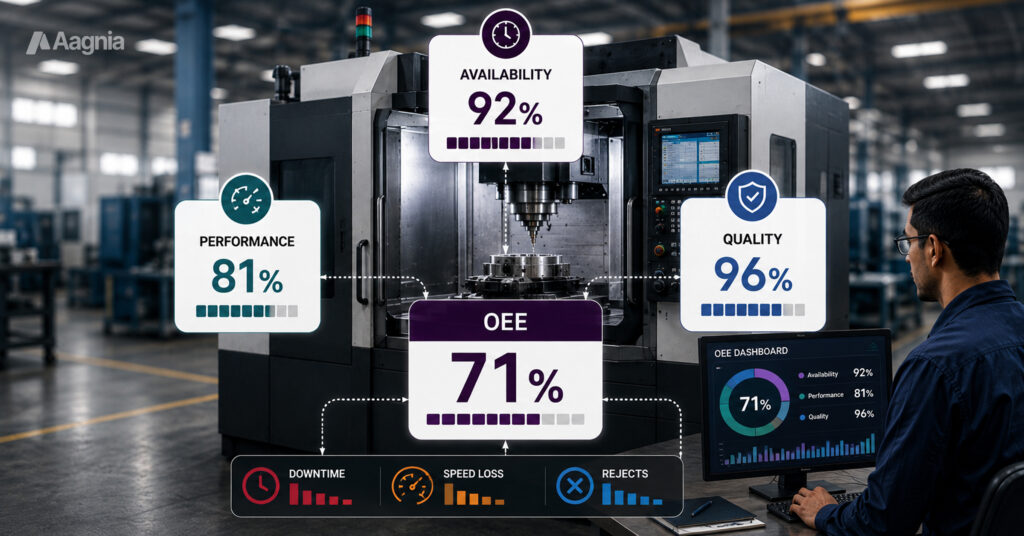
Understanding OEE Through Production Data
Producing 1,000 units doesn’t automatically mean a machine performed efficiently.
There could have been downtime.
The machine may have operated below its expected speed.
Some of the output may have failed quality requirements.
That’s why Overall Equipment Effectiveness (OEE) remains such an important manufacturing KPI.
OEE = Availability × Performance × Quality
OEE gives production teams a clearer picture of where manufacturing capacity is actually being lost.
And that leads to better questions:
- Why did the machine stop?
- Why did production slow down?
- Where are we losing productive time?
- How much output met our quality expectations?
These questions turn production data into opportunities for improvement.
From Production Data to Manufacturing Intelligence
Factories already generate a huge amount of information.
The challenge isn’t generating more data.
The challenge is turning that data into decisions.
A connected manufacturing dashboard can help teams bring together information around:
- Production progress
- Machine activity
- Downtime
- Material consumption
- Quality
- OEE
- Manufacturing performance
Instead of spending time collecting updates from different sources, decision-makers can focus on understanding what needs attention now.
ERP + MES + IoT: A More Connected Factory
Smart manufacturing isn’t about replacing every existing system.
It’s about making different layers work together.
ERP → Business & Production Planning
MES → Shop-Floor Execution & Production Monitoring
IIoT → Machine & Operational Data
Analytics → Performance Insights & Better Decisions
When these layers connect, information can move more effectively between management and the shop floor.
That’s a major step toward Industry 4.0 and smart manufacturing.
A Smart Factory Starts With Visibility
When we hear the words Smart Factory, it’s easy to imagine robots, AI, and fully automated production lines.
But there’s something more fundamental.
Before a factory can become intelligent, it needs to understand its own operations.
- What are we producing?
- Which materials are being consumed?
- How are our machines performing?
- Where are we losing production time?
- Are we meeting quality expectations?
- Are we achieving our production targets?
These questions form the foundation of a more connected and data-driven manufacturing environment.
Building a More Connected Manufacturing Environment
With IoT3Sixty MES, the goal is to bring people, machines, materials, processes, and production data closer together within a connected manufacturing environment.
Digital transformation on the shop floor isn’t simply about introducing more technology.
It’s about seeing production clearly enough to make better decisions.
Conclusion:
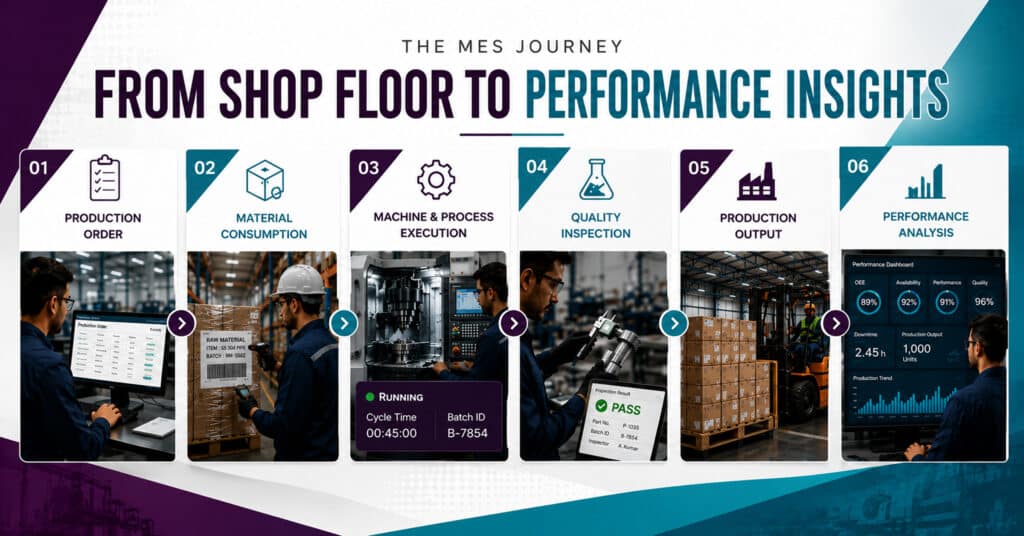
A Manufacturing Execution System helps close the gap between production planning and what is actually happening on the shop floor.
By connecting production orders, material consumption, machine execution, quality inspection, production output, and performance analysis, manufacturers can gain greater visibility into their operations.
When MES works together with ERP, IIoT, and analytics, manufacturers can move toward a more connected, data-driven approach to production.
Connect Production. Understand Performance. Improve Manufacturing.
- MQTT in Modern Manufacturing
- How Smart Batch Operations Improve Production Traceability
- Predictive Maintenance: How IoT and AI Work Together
- IOT3Sixty MES for Downtime Tracking and Analysis
- Production Planning and Shop Floor Execution
- Manufacturing Execution System (MES): Smart Factory Solution
- Warehouse Management System (WMS) for Smarter Warehouses
- Smart Factories: WMS, MES, AI & Real-Time Data
- Industrial IoT for Foundries: Smarter, Connected Manufacturing
- RFID Asset Tracking for Manufacturing: Reduce Audit Time