How Smart Batch Operations Improve Production Traceability
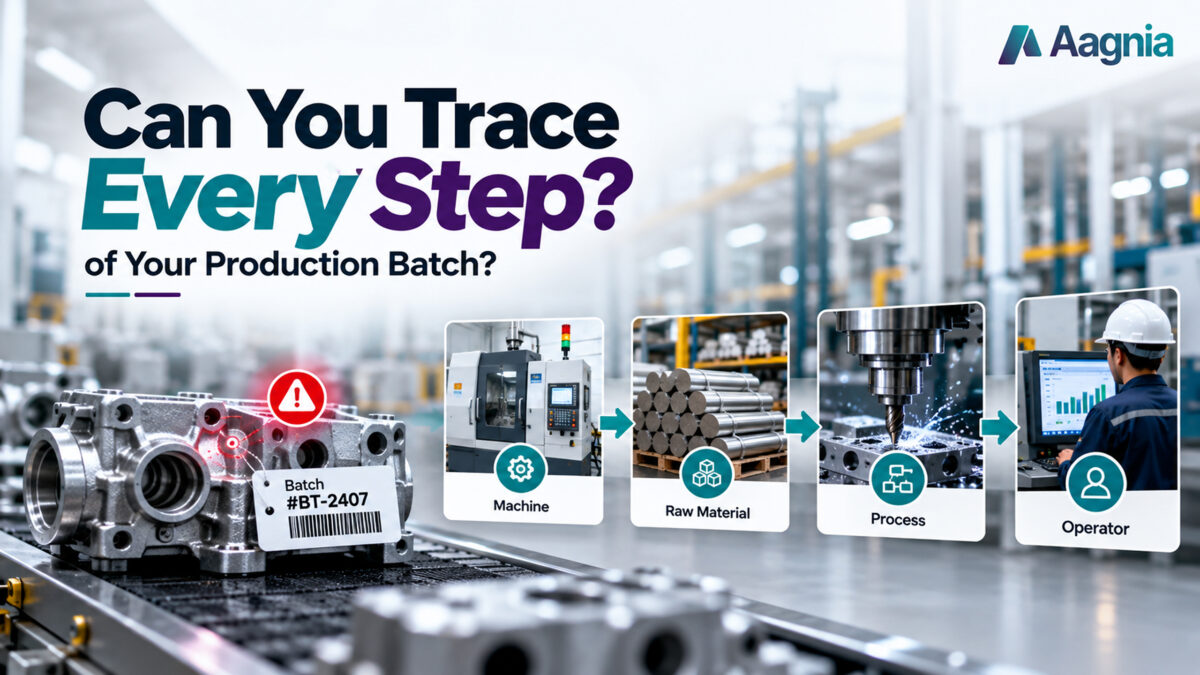
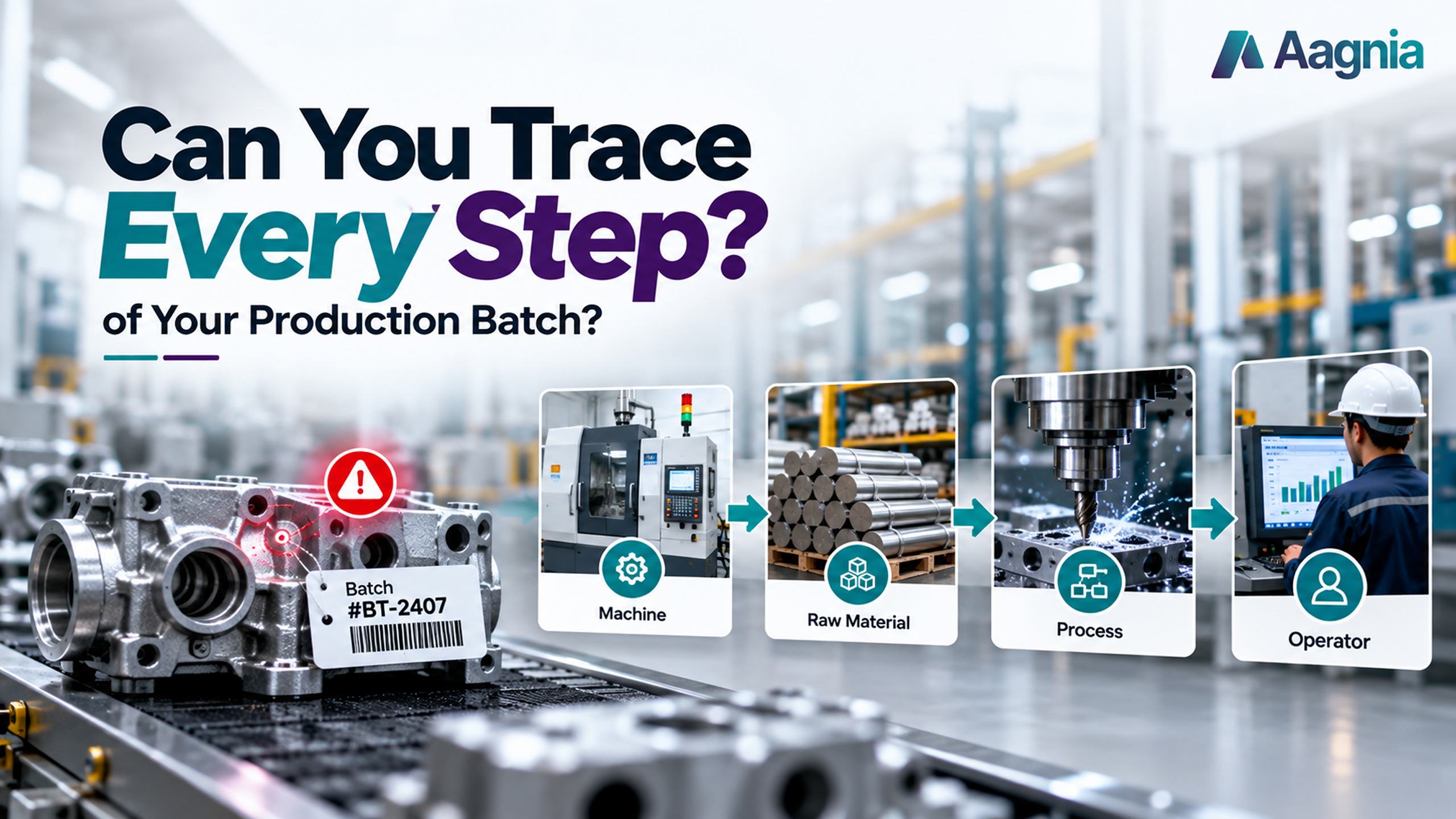
One production batch. One quality issue. Can you trace exactly what happened?
Imagine a customer reports a quality issue with a product delivered last week. The first questions are simple, but finding the answers can be difficult:
Which batch was involved? Which raw materials were used? Which machine produced it? Which process was followed? Which operator handled the production?
Without connected and organized production data, tracing this information can take hours or even days.
This is where batch operations and production traceability become important.
What Is Production Traceability?
Production traceability is the ability to track and record the history of a product throughout its manufacturing journey.
Depending on the manufacturing process, traceability can connect information such as:
- Raw materials and material batches
- Production orders
- Batch numbers
- Machines and equipment
- Production processes
- Operators and shifts
- Production quantities
- Quality results
- Process parameters
- Downtime and production events
- Finished goods
By connecting these details, manufacturers can build a clearer record of what was produced, when it was produced, what materials were used, and how the production process was carried out.
Why Is Batch Traceability Important?
Manufacturing processes involve multiple stages, materials, machines, and production activities. If these activities are recorded separately, it can become difficult to establish the relationship between them.
For example, a finished product may be linked to a particular production batch, but identifying the exact raw material batch, machine, process conditions, and quality results associated with that production may require checking multiple records.
A connected batch traceability system can make these relationships easier to follow.
This can help manufacturers with:
- Faster quality investigations
- Better production visibility
- More accurate batch records
- Easier identification of affected products
- Improved root-cause analysis
- Reduced time spent searching for production information
- Better compliance and documentation
How Smart Batch Operations Improve Traceability
1. Batch-Wise Production Tracking
Every production batch can be assigned a unique identity and tracked throughout the manufacturing process.
Important information can be associated with the batch, including:
- Production order
- Product or item
- Planned quantity
- Actual quantity
- Production date and time
- Production line
- Machine
- Shift
- Operator
This creates a structured production history for each batch.
2. Material-to-Production Traceability
Raw materials are an important part of production traceability.
A finished batch may contain materials received from different suppliers or material lots. Recording which material batches were consumed during production helps establish a relationship between the input materials and the finished product.
This makes it easier to answer questions such as:
Which raw material batches were used to produce this finished batch?
Similarly, manufacturers can investigate which finished batches were produced using a particular raw material lot.
3. Machine and Process Visibility
Production traceability becomes more useful when batch information is connected with machine and process data.
Manufacturers can track information such as:
- Machine used
- Process stage
- Production parameters
- Cycle time
- Machine status
- Process events
- Downtime
- Production quantities
This helps provide greater context around how a particular batch was produced.
If a quality issue is identified, teams can investigate whether the affected batch was associated with a particular machine, process, or production condition.
4. Real-Time Production Information
Traditional production records may be updated after production activities have already taken place.
Real-time production monitoring can provide information while manufacturing is in progress.
Teams can monitor:
- Current batch status
- Production progress
- Machine status
- Production quantities
- Process events
- Quality information
- Downtime
This can help production teams identify issues earlier rather than discovering them only after the batch has been completed.
5. Faster Root-Cause Investigation
When a quality issue occurs, the investigation often involves reviewing multiple records.
A connected traceability system can bring relevant batch, material, machine, process, and quality information together.
For example, if a finished product fails a quality inspection, the investigation can begin by identifying:
Finished Product → Batch → Production Order → Materials → Machine → Process → Quality Results
This creates a structured path for investigating where the issue may have originated.
From Production Records to Connected Traceability
Simply collecting production records is not enough.
The real value comes from connecting information across different stages of the manufacturing process.
A connected traceability structure can follow:
Material → Batch → Production Order → Machine → Process → Quality → Finished Product
When these relationships are maintained consistently, manufacturers can build a more complete production history.
This can also reduce dependence on manually searching through spreadsheets, paper records, or disconnected systems.
Traceability and Quality Management
Quality management and production traceability are closely connected.
When quality problems occur, manufacturers need reliable production information to understand the scope and possible source of the issue.
Traceability can help teams identify:
- Affected production batches
- Related material lots
- Machines involved
- Production periods
- Quality inspection results
- Related finished products
This information can support faster investigation and more informed corrective action.
The Role of Digital Batch Operations
Digital batch operations can bring together production planning, material consumption, machine information, process data, and quality information within a connected production environment.
Instead of treating each production record as an isolated entry, manufacturers can create relationships between the different events that occur during production.
This makes it easier to move from simply asking:
“What was produced?”
to asking:
“What materials, machines, processes, and conditions were involved in producing it?”
Conclusion:
Production traceability is about more than assigning a batch number.
It is about creating a connected history of the manufacturing process—from raw materials and production orders to machines, processes, quality results, and finished products.
With smart batch operations and connected production data, manufacturers can improve visibility, simplify quality investigations, support root-cause analysis, and respond more effectively when production issues occur.
The goal is simple:
Know the batch. Know the material. Know the machine. Know the process. Know what happened.
Better traceability leads to better visibility, faster investigation, and more informed manufacturing decisions.